

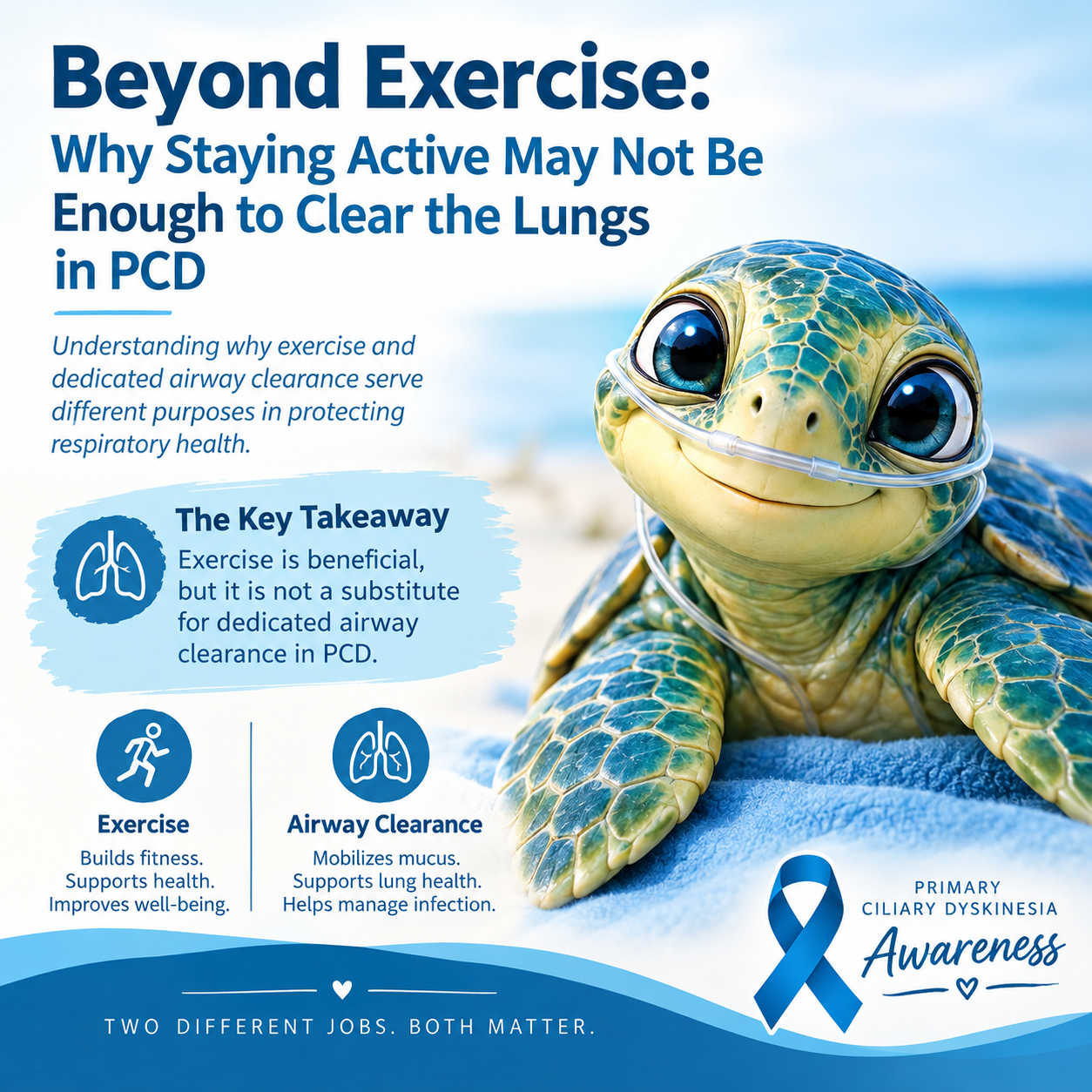
Exercise is valuable for people living with primary ciliary dyskinesia (PCD), and it may help move mucus. But exercise alone has not been established as a reliable substitute for an individualized airway-clearance plan. A walk around the neighborhood, a swim, a bike ride, or a game with friends can make the heart work harder and the lungs breathe more deeply. For some people with PCD, movement also brings on a productive cough. That can raise an understandable question: If exercise helps
me cough up mucus, does it count as my airway clearance?
Physical activity can be a meaningful part of respiratory care, and it offers benefits that reach well beyond the lungs. Airway-clearance techniques, however, have a specific purpose: helping move and remove secretions that are difficult to clear. Both deserve a place in the conversation about living well with PCD.
PCD Snapshot: Why mucus can be difficult to clear
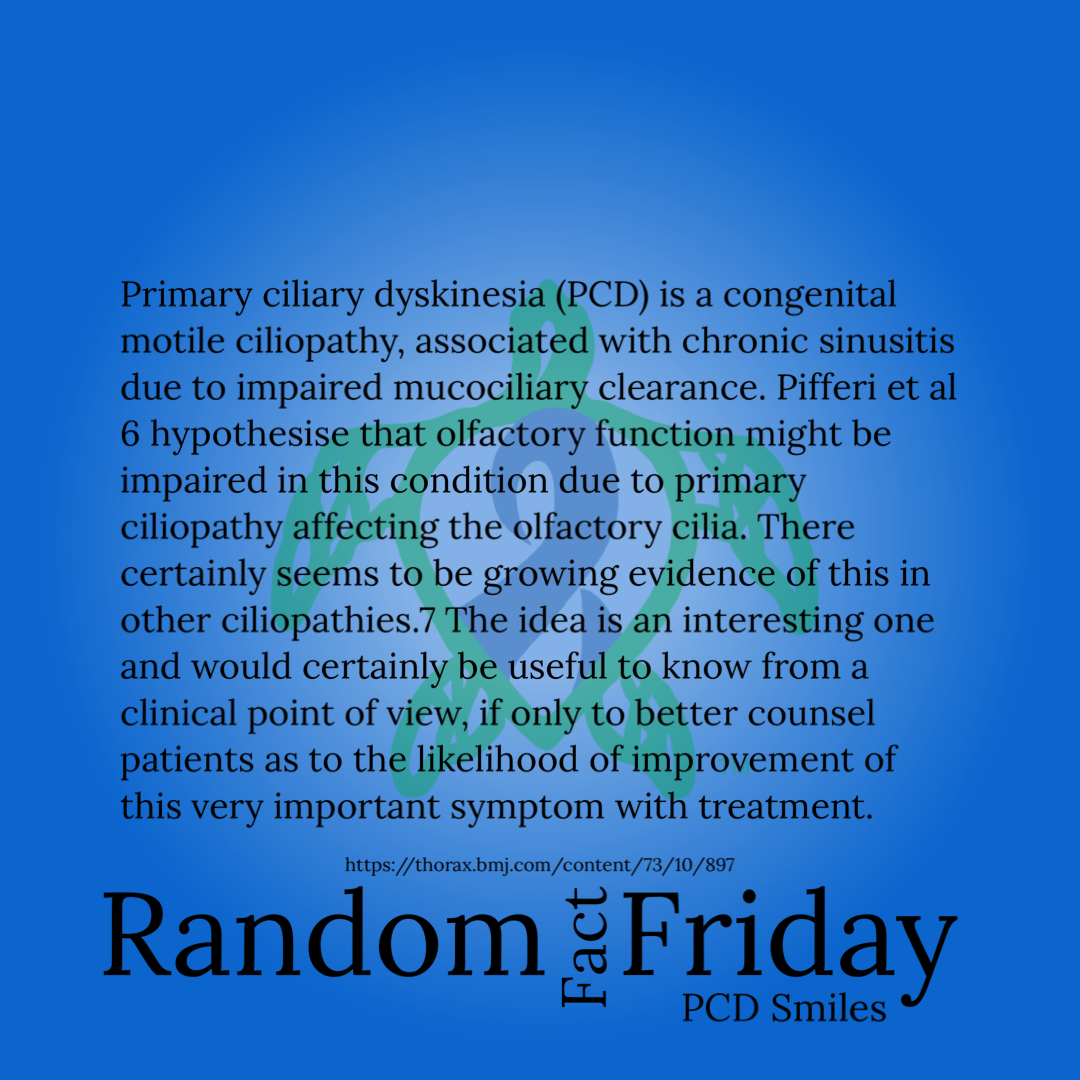
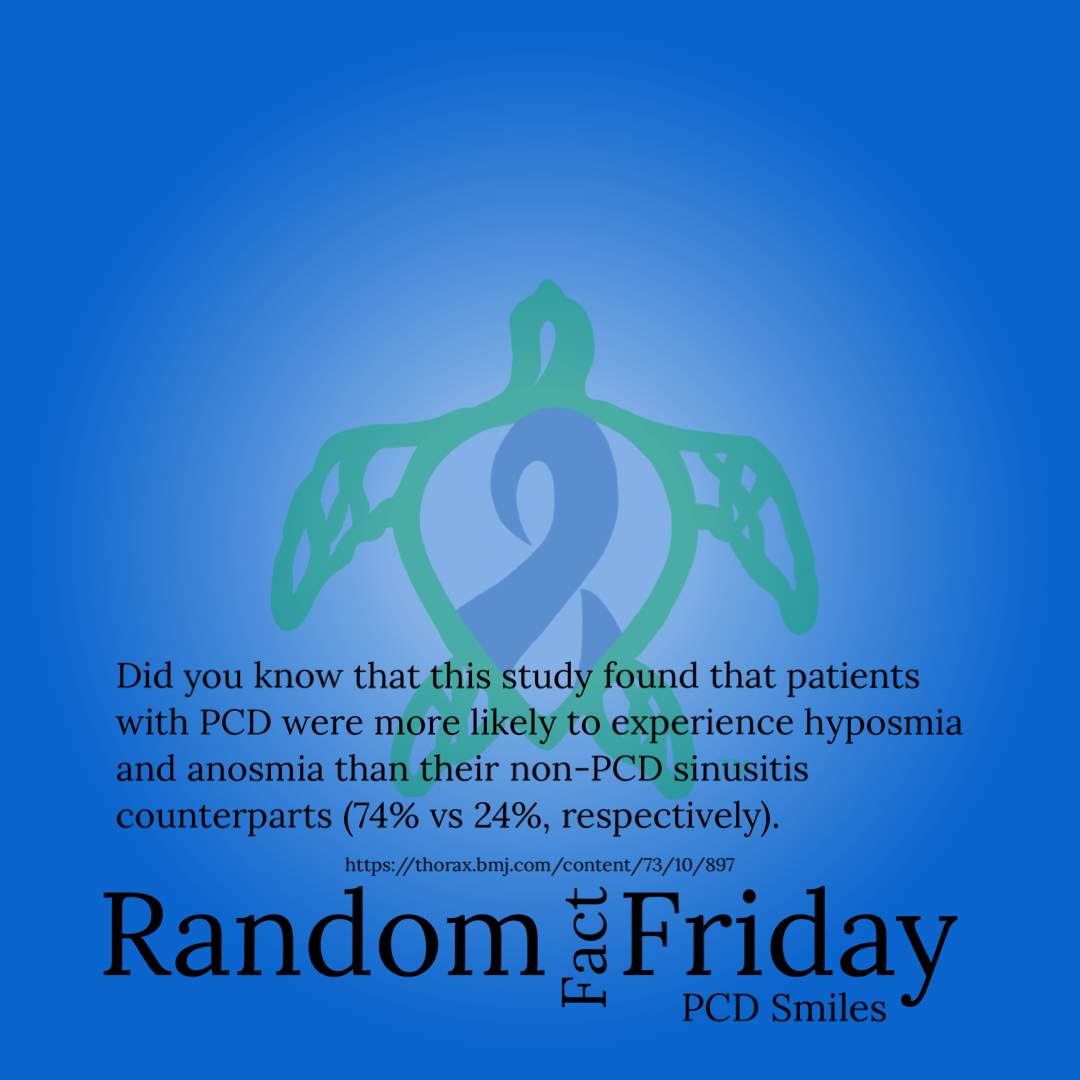
Primary ciliary dyskinesia is a rare genetic condition that affects motile cilia—tiny structures that normally move in coordinated waves. In much of the respiratory tract, their movement helps carry mucus toward the throat, where it can be swallowed or coughed out.
Mucus has an important job. It traps inhaled particles and microorganisms, helping protect the airways. But when cilia do not work as they should, that mucus can be harder to move.
Retained secretions can contribute to recurring infection and inflammation. Over time, some people develop bronchiectasis, a condition in which the airways become abnormally widened and damaged. The course of PCD varies: symptoms, complications, and treatment needs are different from one person to another.
Coughing and airflow can still help move mucus in people with PCD. What is impaired is a major part of the body’s usual, ongoing clearance system. Currently available treatments do not repair the underlying airway ciliary defect. NHLBI, NIH
Why exercise matters
Exercise can support cardiovascular health, muscle strength, endurance, and the ability to participate in daily life. Depending on the activity and the person, it can also offer enjoyment, social connection, and a sense of independence.
For someone with PCD, physical activity may also help loosen or move secretions. Breathing faster and more deeply changes airflow through the lungs, and movement may encourage coughing.
That effect is real for some people. If you notice that a walk helps you bring up mucus, that observation is worth sharing with your care team.
But a productive cough after exercise cannot tell you exactly how much mucus remains in other parts of the lungs. And because everyone’s respiratory health, activity level, and mucus clearance are different, the same activity will not necessarily have the same effect for everyone.
Exercise can be adapted, too. It does not have to mean running a marathon or pushing through severe breathlessness. For one person, movement may mean a favorite sport; for another, it may mean gentle activity, rest breaks, or a supervised rehabilitation program. A person who uses supplemental oxygen should discuss activity and oxygen needs with their healthcare team.
Being active is not proof that someone’s lungs are unaffected by PCD. Likewise, needing a slower pace is not a failure.
What is airway clearance?
Airway clearance refers to techniques used deliberately to help move and remove mucus from the airways. A care team selects and teaches an approach based on the person’s health, abilities, preferences, and circumstances.
Airway-clearance approaches may include:
- Breathing techniques, such as the active cycle of breathing techniques.
- Huffing and coughing, which can help move or expel secretions.
- Positive expiratory pressure devices, which create resistance as a person breathes out.
- Oscillating devices, which combine resistance with vibrations.
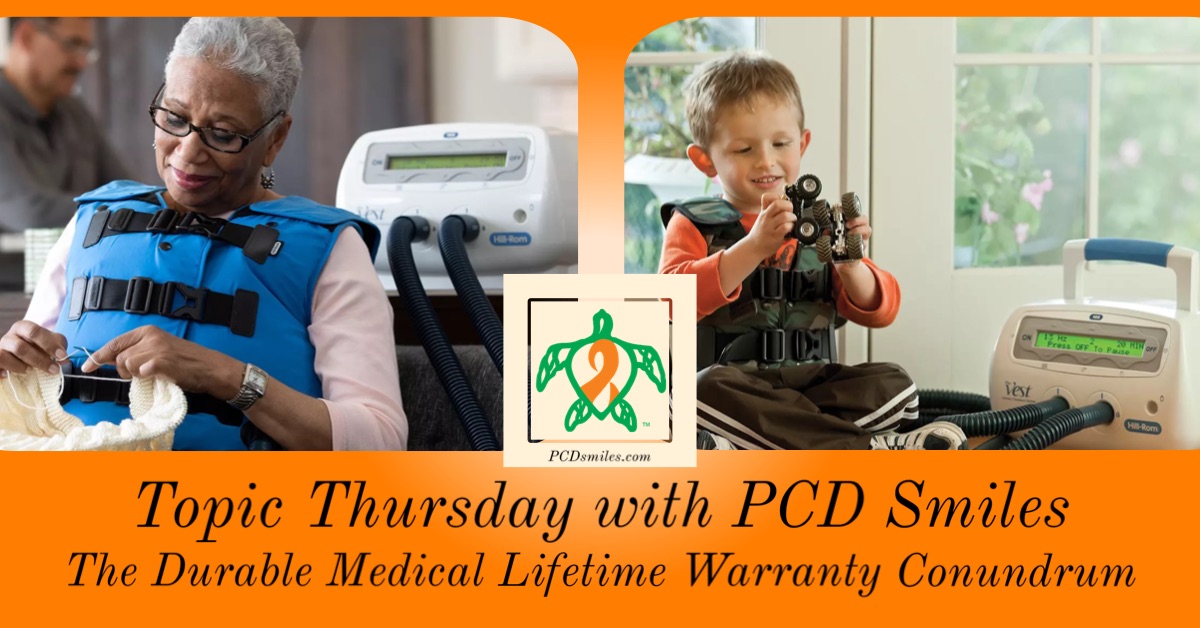
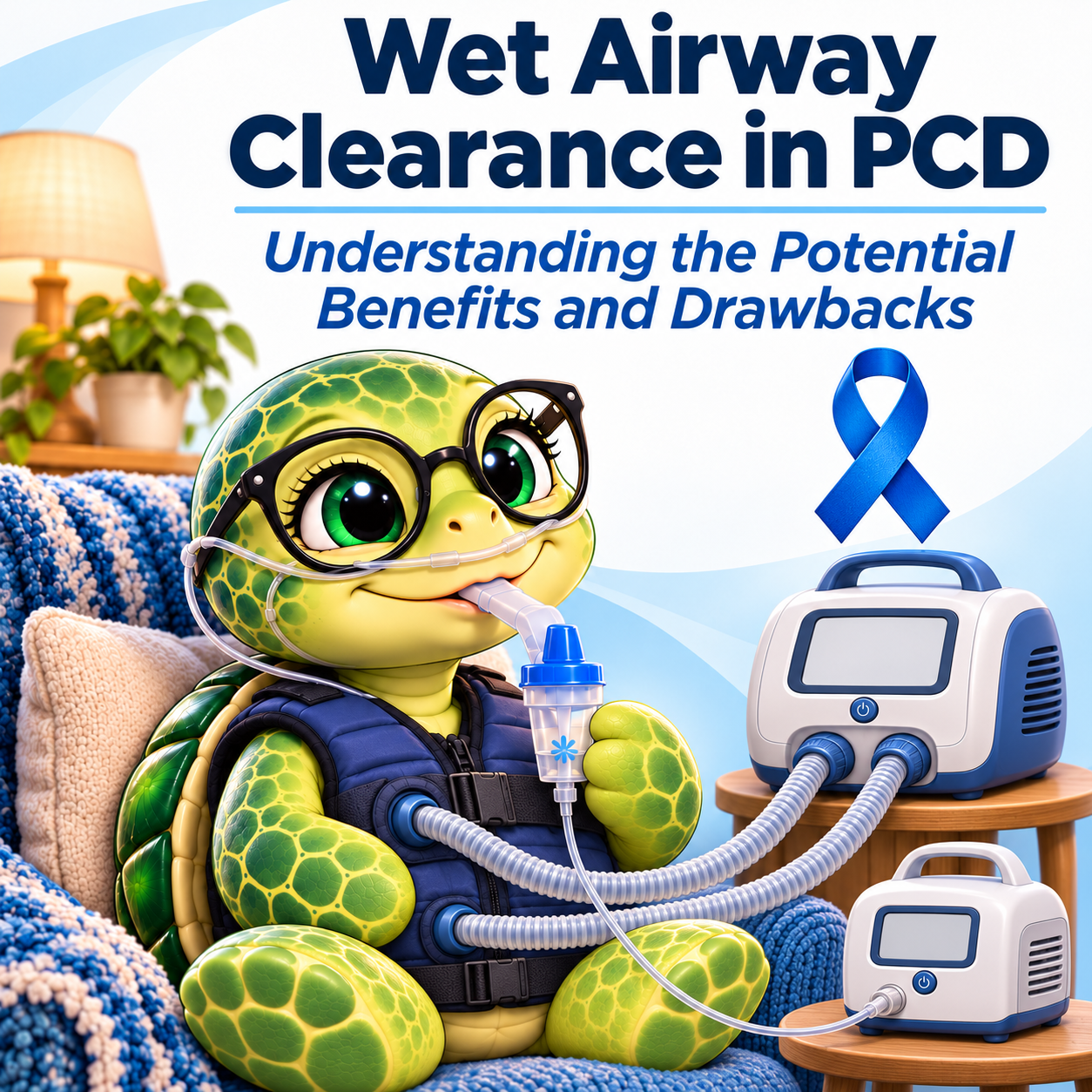
- Chest-wall oscillation vests, which apply vibrations to the chest.
- Hands-on techniques, including percussion or other assistance when appropriate.
- Other pressure-based devices, including the Volara system for selected patients.
These approaches do not all work in the same way, and they are not interchangeable for every person. Some people use a combination of methods, while others rely on a simpler routine.
Moving mucus is also only part of the process. Depending on the technique and the individual, secretions may still need to be removed through huffing, coughing, or another strategy recommended by the care team.
Why not simply exercise instead?
Exercise and airway clearance can overlap: both may involve deeper breathing, changes in airflow, and coughing. But a person can be physically active and still need a structured approach to secretion management.
English national physiotherapy standards for children and young people with PCD recommend individualized airway clearance and state that exercise should not be considered a substitute for airway-clearance techniques. Those standards reflect specialist recommendations; they do not mean researchers have completed a definitive long-term trial of every possible exercise approach. acprc.org.uk
For adults, too, PCD care recommendations support airway clearance and physical activity as parts of respiratory care. The details should be tailored with a qualified professional who understands the person’s condition. PMC
That does not mean movement can never be incorporated into an airway-clearance routine. It means the decision should be made thoughtfully with the care team, rather than assuming that a workout has met every respiratory-care need.
What do we know about preventing bronchiectasis progression?
This is where careful wording matters.
There is a strong clinical reason to address retained mucus in PCD, and specialist guidance supports airway clearance. But long-term research directly comparing exercise alone with dedicated airway clearance in people with PCD remains limited.
That means we cannot honestly say that research has conclusively proved exercise alone will fail to prevent bronchiectasis progression in every person. We also cannot say that any particular airway-clearance technique or device is guaranteed to prevent progression.
Limited evidence is not the same as proof that a treatment has no value. Airway clearance may help a person manage secretions and symptoms even when its effect on long-term structural changes has not been established in a definitive PCD trial.
It is equally important to avoid blame. Bronchiectasis can progress despite attentive care. If treatment becomes difficult to manage, the answer is support and reassessment—not an assumption that the person has not tried hard enough.
Is one airway-clearance device best?
There is no single device or technique that has been shown to be best for everyone with PCD.
A useful plan takes more than the device itself into account. Age, lung health, fatigue, comfort, access, cost, ability to use the technique, cleaning requirements, and personal preference can all matter.
For example, Volara is a pressure-based system that may be considered for selected patients. Its intended actions should not be confused with proof that it prevents bronchiectasis progression in PCD. A person considering or using any device deserves a discussion of its potential benefits, limitations, and practical demands.
For people using Volara: The U.S. Food and Drug Administration has published safety communications concerning Volara circuits, including a correction related to potential air or medication leakage. Users should review applicable notices and contact their equipment provider or care team about their particular setup and the required correction. FDA
How do you know whether your plan is helping?
The answer is rarely as simple as measuring how much mucus appears in a tissue.
Bringing up mucus shows that some secretions were removed, but it does not show how much remains. On the other hand, producing little visible sputum during a session does not automatically mean the treatment was unsuccessful.
A healthcare team may look at several things together: symptoms, changes from the person’s usual pattern, infections or exacerbations, lung-function trends, treatment technique, comfort, and the person’s own experience.
It is reasonable to ask a respiratory therapist or physiotherapist to watch you use a technique or device. A routine that worked well years ago may need to change as health, abilities, equipment, or daily responsibilities change.
The burden of doing both is real
“Make time for exercise and airway clearance” can sound straightforward. In real life, each recommendation sits alongside everything else a person must do.
A treatment may involve gathering supplies, preparing medication, using equipment, coughing, cleaning and disinfecting parts, drying them, and ordering replacements. There may also be appointments, insurance calls, work or school, family responsibilities, meals, and the need for rest.
For caregivers, some or all of that work may fall on them as well.
If a routine feels exhausting or impossible to fit into the day, that information belongs in the care conversation. It may be possible to review the technique, schedule, equipment, or support available. A plan that fits a person’s life is more likely to be one they can sustain.
You might ask your care team:
- What is my current airway-clearance routine intended to accomplish?
- How can the physical activity I enjoy fit alongside it?
- Can you watch my technique and check whether it still meets my needs?
- What should I do when I am sick, especially tired, or unable to complete my usual routine?
- What alternatives or support might make my plan more manageable?
Do not change prescribed treatment on your own, but do speak up when it is uncomfortable, burdensome, or no longer seems to fit.
The key message
Exercise and airway clearance each have a role in PCD care. Movement can support strength, participation, and well-being—and may help move mucus. An individualized airway-clearance plan provides a deliberate approach to managing secretions when the body’s usual clearance system is impaired.
The goal is not simply to add more tasks to the day. It is to develop a realistic plan that supports respiratory health and leaves room for life.
Be sure to join us next Thursday for another conversation about primary ciliary dyskinesia.
Join our Facebook group Turtle Talk Café today.
We have several ways that you can donate to PCD Smiles;
- Visit Smile E. Turtle's Amazon Wishlist
- For more information on how you can donate, please visit our "Donation" page to check out our "Do & Don't policies.
- Or sponsor a PCD Smiles cheer package today!
- To shop for your “Official” turtle care ribbon gear today, visit PCD Style
Thank you for your consideration!
Sources
- National Heart, Lung, and Blood Institute: PCD treatment
- English national physiotherapy standards for children and young people with PCD
- PCD Foundation consensus recommendations for diagnosis, monitoring, and treatment
- FDA: Volara positive-pressure breathing device correction
Educational/medical disclaimer:
This article is for educational and awareness purposes only and is not a substitute for professional medical advice, diagnosis, or treatment. PCD and treatment needs vary from person to person. Discuss airway clearance, exercise, oxygen, medications, and equipment with qualified healthcare professionals familiar with your circumstances. Do not start, stop, or change a prescribed treatment based on this article, and never delay seeking professional advice because of something you have read here.