



When most people hear Primary Ciliary Dyskinesia (PCD), they think about the lungs. The conversation usually centers on chronic cough, sinus infections, mucus buildup, airway clearance, and respiratory treatments.
But there is another important part of the PCD story that often receives far less attention: the brain.
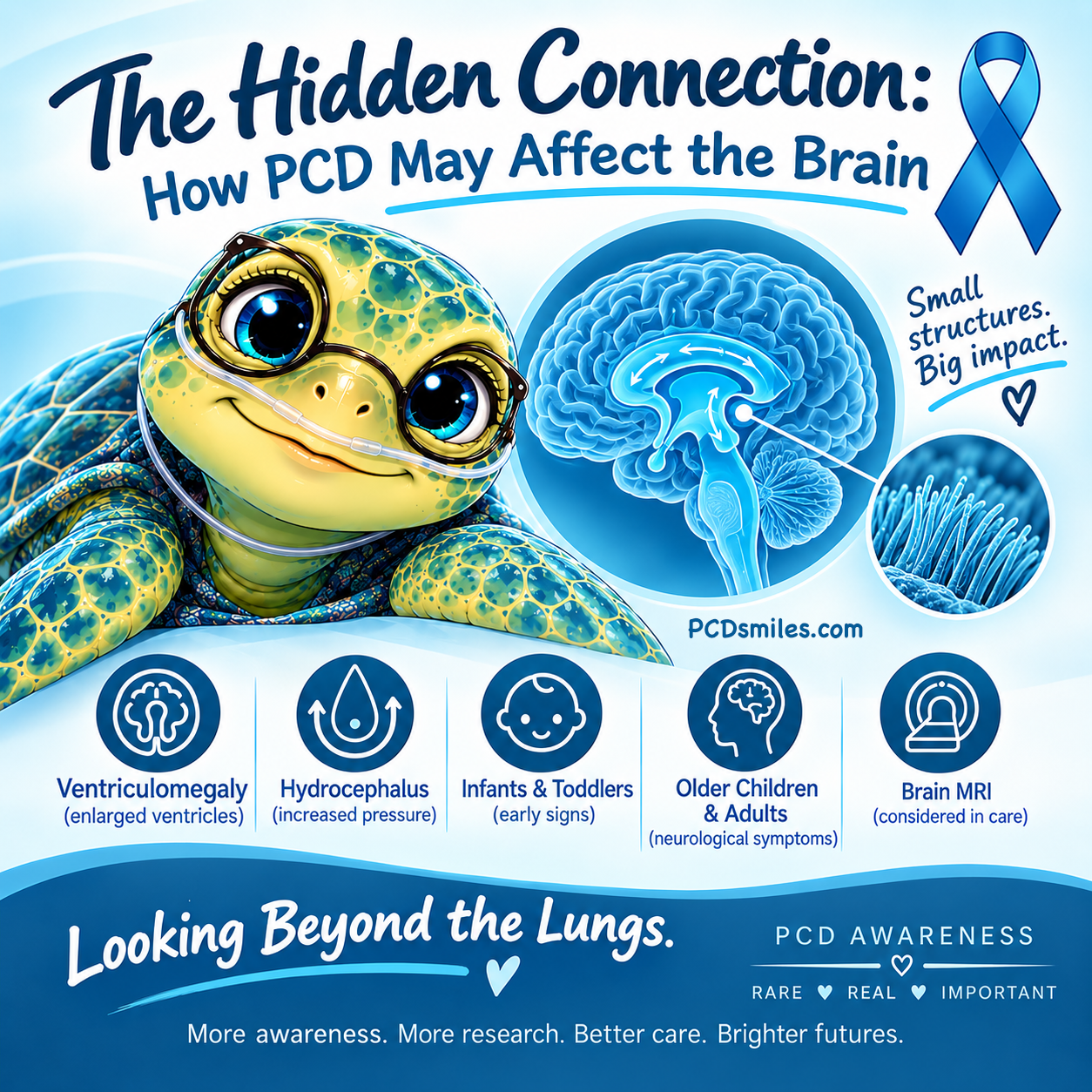
PCD is a genetic disorder involving cilia throughout the body. The same genetic changes that affect the microscopic, hair-like cilia in the respiratory system can also affect specialized cilia found deep within the brain.
Understanding this connection is important
because these tiny structures have an important job in keeping fluid moving through the brain.
The Brain's Tiny Fluid-Management System
Deep inside the brain is a network of fluid-filled spaces called ventricles. These ventricles are lined with specialized cells called ependymal cells, which have thousands of active, motile cilia on their surfaces.
In a healthy brain, these cilia beat together in a coordinated pattern. Their movement helps create a current that circulates cerebrospinal fluid (CSF) throughout the brain.
This constant circulation of CSF is important for several reasons. It helps:
- Deliver nutrients and chemical signals to brain cells.
- Remove or flush out toxic waste products from brain tissue.
- Regulate pressure within the skull.
Think of these microscopic cilia as part of the brain's own fluid-management system. Their coordinated movement helps keep cerebrospinal fluid circulating where it needs to go.
When the Microscopic Pump Doesn't Work Properly
In people with PCD, these microscopic brain cilia may be paralyzed or move abnormally. When the cilia cannot effectively help circulate fluid, the normal movement of CSF can become disrupted.
Fluid may begin to accumulate, and pressure can increase.
This can result in two different neurological conditions:
Ventriculomegaly
Ventriculomegaly refers to enlargement of the brain's fluid-filled ventricles.
Research indicates that many people with PCD may experience this structural change as they age, even when they do not have obvious neurological symptoms.
In other words, changes in the size of the brain's ventricles may occur without necessarily producing noticeable warning signs.
Hydrocephalus
In more severe situations, disruption of CSF flow can lead to a dangerous buildup of fluid and pressure known as hydrocephalus.
This appears to be particularly associated with certain genetic forms of PCD, including mutations involving MCIDAS or CCNO.
If significant pressure builds up and remains untreated, it can compress delicate brain tissue.
What Signs Should We Watch For?
Because possible brain involvement in PCD can be overlooked, recognizing potential neurological warning signs is important for patients, caregivers, and healthcare providers.
The signs can look different depending on a person's age.
In Infants and Toddlers
Potential warning signs include:
- Unusually rapid head growth
- Bulging fontanelle, or soft spot
- Extreme irritability or lethargy
- Delayed developmental milestones
These symptoms can have multiple possible causes, but in a child with PCD, they may warrant further evaluation.
In Older Children and Adults
Potential symptoms include:
- Chronic or severe headaches
- Visual changes, including blurred or double vision
- Nausea or unexplained dizziness
- Difficulty concentrating
Again, these symptoms can occur for many different reasons. They should not automatically be assumed to be caused by PCD. However, awareness of the potential connection can help healthcare providers recognize when additional evaluation may be appropriate.
Looking Beyond the Lungs
For many years, PCD care has been focused primarily on the respiratory system, with pulmonologists playing a central role in managing the disease.
But if PCD can affect cilia in other parts of the body, including specialized cilia within the brain, it raises an important question:
Should PCD care look beyond the lungs?
A truly comprehensive approach to PCD should consider the whole person, rather than focusing exclusively on respiratory symptoms.
This could include greater awareness of potential neurological involvement and consideration of neurological screening, including baseline brain MRI imaging, as part of PCD management rather than waiting until a neurological emergency develops.
The Bigger Picture
PCD may be best known for its effects on the lungs, but cilia are found throughout the body—and their functions extend far beyond simply clearing mucus from the airways.
Inside the brain, specialized cilia help support the movement of cerebrospinal fluid. When these microscopic structures don't function properly, disruptions in fluid circulation may occur.
That is why continuing to study the relationship between PCD and the brain is so important.
Looking beyond the lungs could help healthcare providers recognize potential neurological complications earlier, improve symptom management, and provide more comprehensive care for people living with PCD.
The cilia may be microscopic—but their impact can reach far beyond what we can see.
Be sure to join us tomorrow for another conversation about primary ciliary dyskinesia.
Join our Facebook group Turtle Talk Café today.
We have several ways that you can donate to PCD Smiles;
- Visit Smile E. Turtle's Amazon Wishlist
- For more information on how you can donate, please visit our "Donation" page to check out our "Do & Don't policies.
- Or sponsor a PCD Smiles cheer package today!
- To shop for your “Official” turtle care ribbon gear today, visit PCD Style
Thank you for your consideration!
Medical Disclaimer
This article is intended for general educational and informational purposes only and is not a substitute for professional medical advice, diagnosis, or treatment. Infection risks and appropriate prevention strategies can vary considerably between people with PCD based on their lung health, respiratory cultures, treatments, age, and other medical conditions.
Cleaning and disinfection recommendations for respiratory equipment can also vary by device and manufacturer. Always follow the instructions provided by your healthcare team and equipment manufacturer.
Do not start, stop, or change medications, airway-clearance treatments, infection-control practices, or other aspects of your medical care based solely on this article. If you have PCD and are concerned about an infection, worsening respiratory symptoms, or possible exposure to a pathogen, contact your PCD or respiratory healthcare team for individualized guidance.
If you are experiencing severe or rapidly worsening breathing difficulties or another medical emergency, seek urgent medical attention.