What if the disease hurting your lungs was there all along—but nobody knew what to call it?
What if the cough you had as a child wasn't “just a cough”?
What if the endless sinus infections weren't “just allergies”?
What if the ear infections weren't something you were simply supposed to outgrow?
What if the pneumonia, the congestion, the breathing problems, the exhaustion, the hospital visits, and the infections were never a collection of unrelated problems?
What if there was one reason behind all of it—and someone had simply never heard of it?
For many people living with Primary Ciliary Dyskinesia (PCD), this isn't a
hypothetical question.
It is their story.
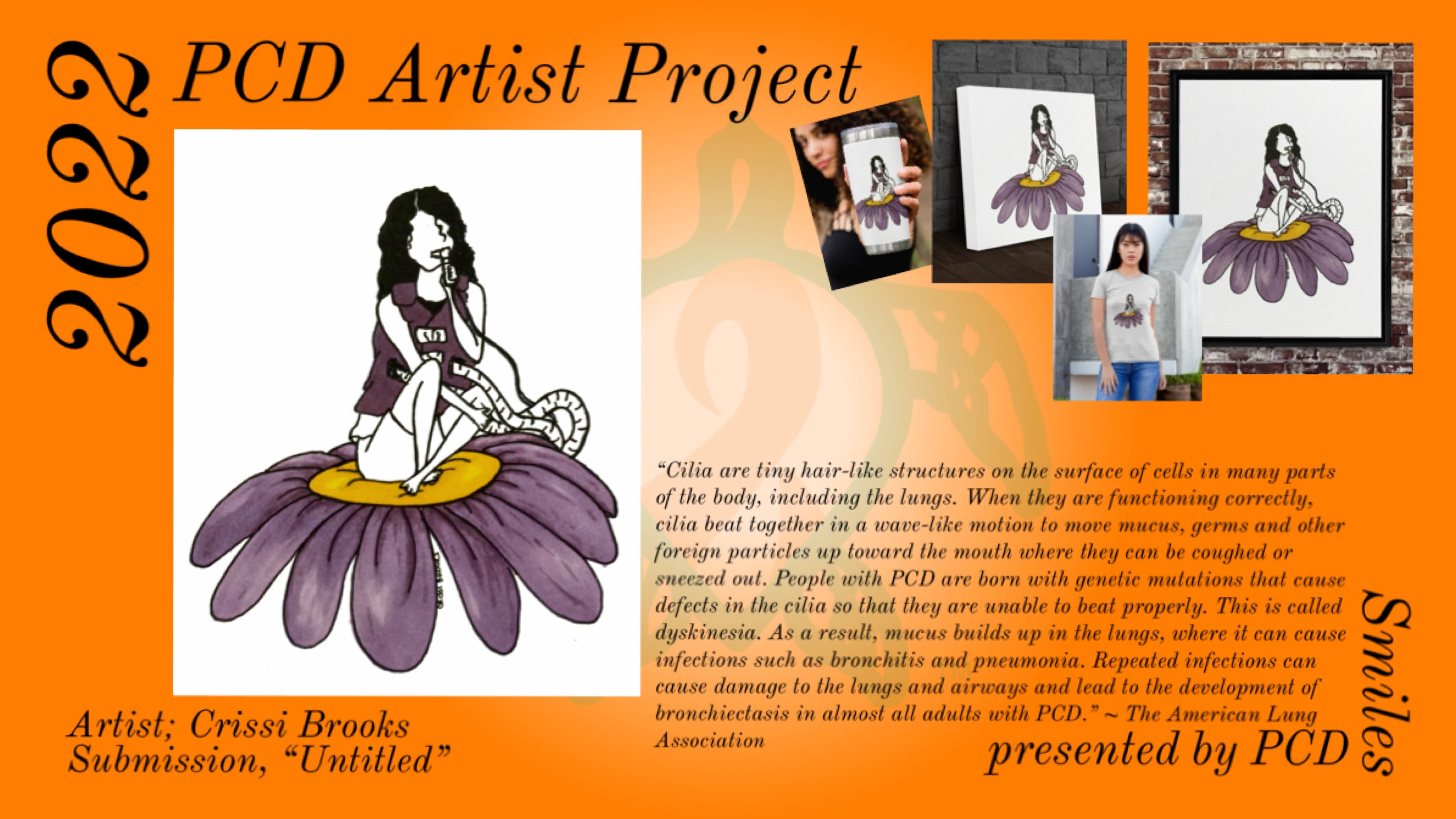
PCD is a rare genetic disorder that affects motile cilia—tiny, hair-like structures that help move mucus and fluids throughout parts of the body, including the airways, sinuses, middle ears, brain, and reproductive system.
But for people living with PCD, the disease is more than a definition in a medical textbook.
It can mean waking up every morning knowing that breathing will require work.
It can mean spending hours doing treatments that most people never see.
It can mean another infection.
Another round of antibiotics.
Another appointment.
Another scan.
Another explanation for why you aren't feeling well.
Another attempt to explain a disease that most people have never heard of.
And sometimes, it can mean spending years wondering why your body has never worked the way everyone else's seems to.
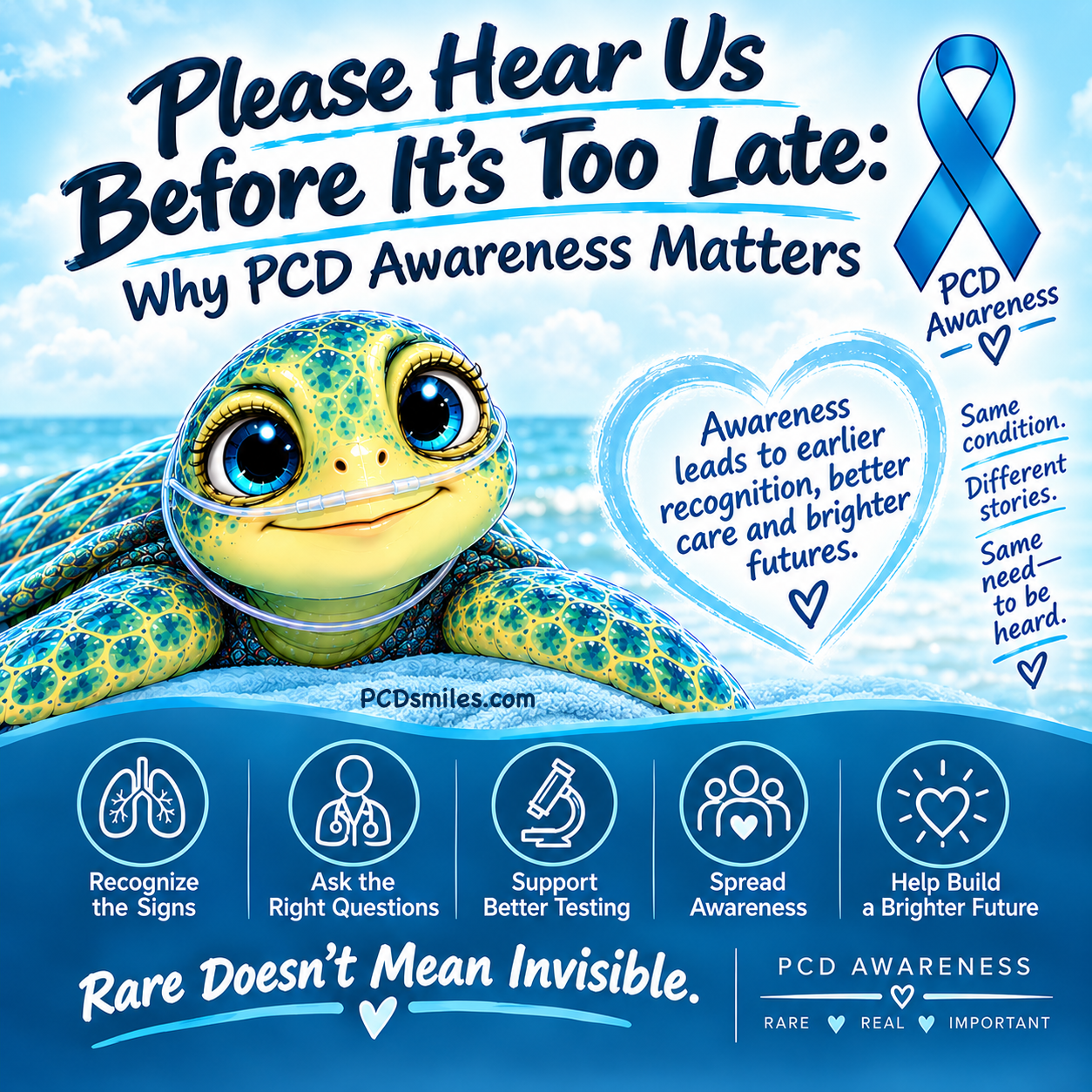
That is why PCD awareness matters.
Not someday.
Not only during awareness month.
Now.
Because when a rare disease remains unknown, the people living with it can become invisible.
A Disease Cannot Be Diagnosed If Nobody Thinks to Look for It
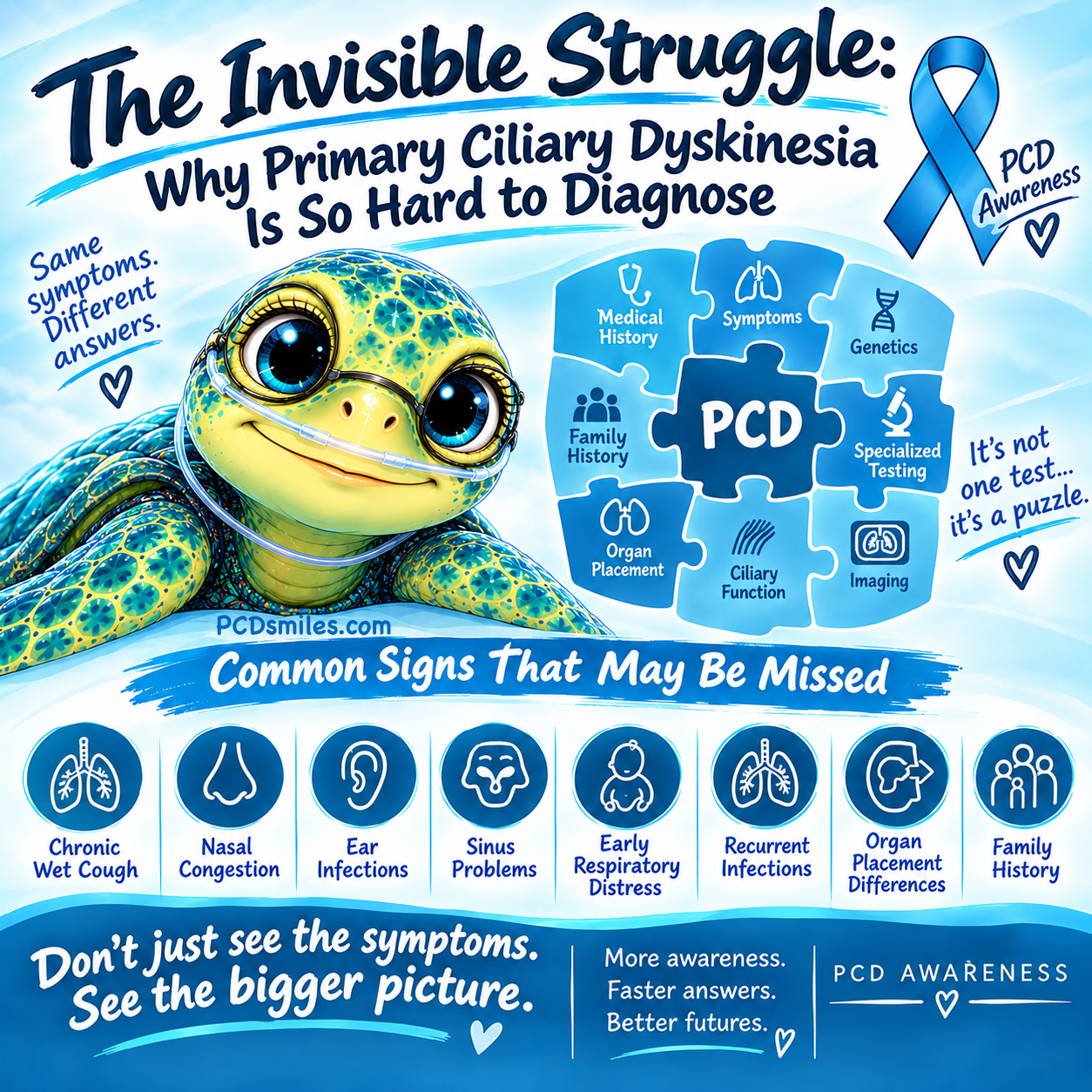
One of the most painful realities of PCD is that the symptoms can begin incredibly early—but recognition may come much later.
A child may have a chronic wet cough from infancy.
Persistent nasal congestion.
Repeated sinus infections.
Frequent ear infections.
Pneumonia.
Unexplained respiratory problems.
And yet, those symptoms can be attributed to asthma, allergies, recurrent childhood infections, or simply a child who “gets sick a lot.”
Sometimes the pieces never get put together.
And that is where awareness can change everything.
Because the earlier PCD enters the conversation, the earlier appropriate diagnostic evaluation can begin.
Knowing the name of a disease gives doctors something to look for.
It gives parents something to ask about.
It gives patients language for what they have been experiencing.
It can turn:
“Something isn't right.”
into:
“Could this be PCD?”
That question matters.
Behind Every Delayed Diagnosis Is a Person
It is easy to talk about delayed diagnosis as a statistic.
But statistics don't tell you what those years feel like.
They don't tell you what it is like to grow up believing you are simply the person who is always sick.
They don't capture the frustration of repeatedly being treated for the symptoms without anyone identifying the underlying disorder.
They don't capture the fear of wondering what years of infections may have done to your lungs.
They don't capture the exhaustion of having to explain yourself over and over again.
And they certainly don't capture the emotional weight of finally receiving a diagnosis and realizing:
There was a reason.
For some people, diagnosis brings relief.
For others, it brings grief for all the years that were lost.
Often, it brings both.
That is why awareness matters so deeply.
The goal isn't simply to put a name on a disease.
The goal is to help people find that name sooner.
Because Your Lungs Don't Get to Forget
PCD can make it difficult for mucus and bacteria to move normally through the airways.
When mucus remains trapped, infections and inflammation can occur repeatedly.
Over time, ongoing airway damage can contribute to bronchiectasis and declining respiratory health.
That is why recognizing PCD matters long before someone reaches an advanced stage of disease.
A diagnosis cannot undo damage that has already occurred.
It cannot erase the years someone has spent sick.
It cannot give someone back the lung function they may have lost.
But diagnosis can open the door to appropriate monitoring and management.
It can lead to individualized airway-clearance strategies, treatment of infections, specialist care, and attention to complications associated with PCD.
Early recognition can't change the past.
But it can help change what happens next.
Awareness Has to Reach the Doctor's Office
PCD isn't common.
And because it isn't common, many healthcare professionals may encounter very few patients with it during their careers.
That creates a problem.
If clinicians aren't familiar with PCD, they may not recognize the pattern.
And if the pattern isn't recognized, specialized diagnostic evaluation may never begin.
Diagnostic testing for PCD can include tools such as nasal nitric oxide testing, high-speed video microscopy, transmission electron microscopy, immunofluorescence, and genetic testing, depending on the clinical circumstances and expertise available.
But none of those tests can help if PCD isn't considered.
That is why awareness isn't just the responsibility of patients.
It belongs in medical education.
In primary care.
In pediatrics.
In pulmonology.
In ENT care.
In respiratory therapy.
In genetics.
In fertility care.
In every place where the pieces of a patient's history may come together.
We need healthcare professionals to recognize the clues.
Because somewhere, right now, there may be another person with PCD who hasn't been recognized yet.
PCD Can Be Invisible—But the Work Is Not
One of the hardest things about living with an invisible disease is that other people may only see the moments when you look okay.
They don't see the treatment you did before leaving the house.
They don't see the airway clearance.
They don't see the nebulizer.
They don't see the medications lined up on the counter.
They don't see the coughing after you lie down.
They don't see the exhaustion that follows an infection.
They don't see the fear behind the next chest scan.
They don't see how much energy can go into simply maintaining your health.
They may look at you and think:
“You look fine.”
But looking fine and feeling fine are not the same thing.
And living with PCD can require an enormous amount of work just to keep going.
Awareness teaches people to look beyond appearances.
Awareness Means Believing People
For someone living with a rare disease, being believed matters.
Believe the person who says something isn't right.
Believe the parent who says their child has been sick again and again.
Believe the patient who says this cough isn't normal for them.
Believe the person who says they are exhausted.
Believe the person whose disease doesn't have an obvious outward appearance.
PCD awareness isn't only about medical facts.
It is about human understanding.
It is about creating a world where people don't have to spend their lives proving that they are sick enough to deserve to be taken seriously.
Rare Does Not Mean Unimportant
PCD may affect a relatively small population.
But every person in that population has a life.
A family.
A future.
Dreams.
Responsibilities.
People who love them.
A story.
Being rare doesn't make a disease less deserving of research.
It doesn't make someone's suffering less significant.
It doesn't make their need for specialized care less important.
And it shouldn't make them easier to overlook.
Rare should never mean invisible.
Awareness Can Give Research a Reason to Keep Going
Rare diseases face unique challenges.
Fewer patients can mean fewer research opportunities, fewer clinicians with extensive experience, and historically fewer resources devoted to developing treatments.
That is why the voices of the PCD community matter.
Every person who talks about PCD helps make the disease a little less invisible.
Every awareness campaign creates another opportunity for someone to learn.
Every patient who participates in research contributes to a greater understanding of the disease.
Every researcher who chooses to study PCD brings us closer to better diagnostic tools, better treatments, and potentially therapies that address the underlying biology of the disease.
People with PCD don't need to be forgotten because our numbers are small.
We need people to understand that our lives are worth researching, protecting, and improving.
Sometimes Awareness Is the First Time Someone Realizes They Aren't Alone
There is something incredibly powerful about hearing someone say:
“I have that too.”
For someone living with a rare disease, those words can change everything.
Suddenly, the strange symptoms aren't quite so strange.
The exhausting treatments aren't something only they understand.
The fear isn't something they have to carry alone.
The questions don't sound so impossible.
The isolation begins to crack.
Awareness creates connection.
It brings patients and families together.
It gives people a place to learn.
A place to share.
A place to advocate.
A place to say:
“I understand.”
And sometimes, that is exactly what someone needs to hear.
This Is Why We Keep Talking About PCD
PCD awareness isn't about getting attention for the sake of attention.
It isn't about a ribbon.
It isn't about a social media graphic.
It isn't about making people memorize the words Primary Ciliary Dyskinesia.
It is about what happens because someone heard the message.
Maybe a parent recognizes the signs in their child.
Maybe a doctor remembers PCD when seeing a patient with a lifelong history of respiratory problems.
Maybe someone finally receives the referral they need.
Maybe a patient stops blaming themselves for being “sick all the time.”
Maybe a family finally understands what has been happening.
Maybe someone who has spent years feeling alone discovers an entire community waiting to welcome them.
And maybe—just maybe—someone is diagnosed before years of unanswered questions become years of irreversible damage.
That is why awareness matters.
We Can't Change What We Don't Recognize
Somewhere, there is a child with a cough that hasn't gone away.
Somewhere, there is a teenager who has spent their life sick more often than their friends.
Somewhere, there is an adult who has been searching for answers for years.
Somewhere, there is a parent who knows something isn't right but hasn't found the reason.
Somewhere, there is a healthcare professional who hasn't yet learned enough about PCD to recognize it.
And somewhere, there is someone hearing the words Primary Ciliary Dyskinesia for the very first time.
What if that person is the one who needed to hear it?
What if one conversation leads to one question?
What if one question leads to one referral?
What if one referral leads to one diagnosis?
What if that diagnosis changes the care someone receives for the rest of their life?
That is why we speak.
That is why we educate.
That is why we share.
That is why we keep telling our stories—even when telling them is exhausting.
Because PCD may be rare.
But the people living with it are not statistics.
We are people.
We are parents.
We are children.
We are spouses.
We are friends.
We are coworkers.
We are patients.
We are fighters.
We are families.
And we deserve to be seen.
We deserve to be heard.
We deserve to be believed.
We deserve knowledgeable care.
And we deserve a future where fewer people have to spend years wondering why they are sick before someone finally recognizes the reason.
PCD awareness isn't simply about making a rare disease known.
It's about making the people living with it impossible to overlook.
Because sometimes, awareness isn't just information.
Sometimes, awareness is the beginning of an answer.
And sometimes, hearing the right words at the right time can change a life.
Thank you for joining us in these conversation about primary ciliary dyskinesia during the month of October, 2026. We hope that you will continue to join us on Thursdays for our feature article of the week.
Join our Facebook group Turtle Talk Café today.
We have several ways that you can donate to PCD Smiles;
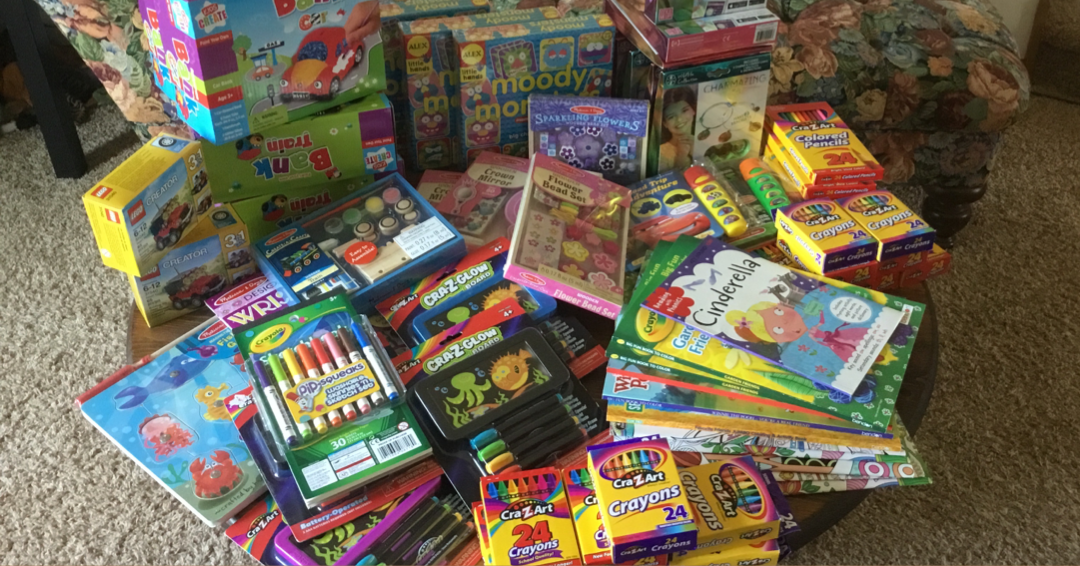
- Visit Smile E. Turtle's Amazon Wishlist
- For more information on how you can donate, please visit our "Donation" page to check out our "Do & Don't policies.
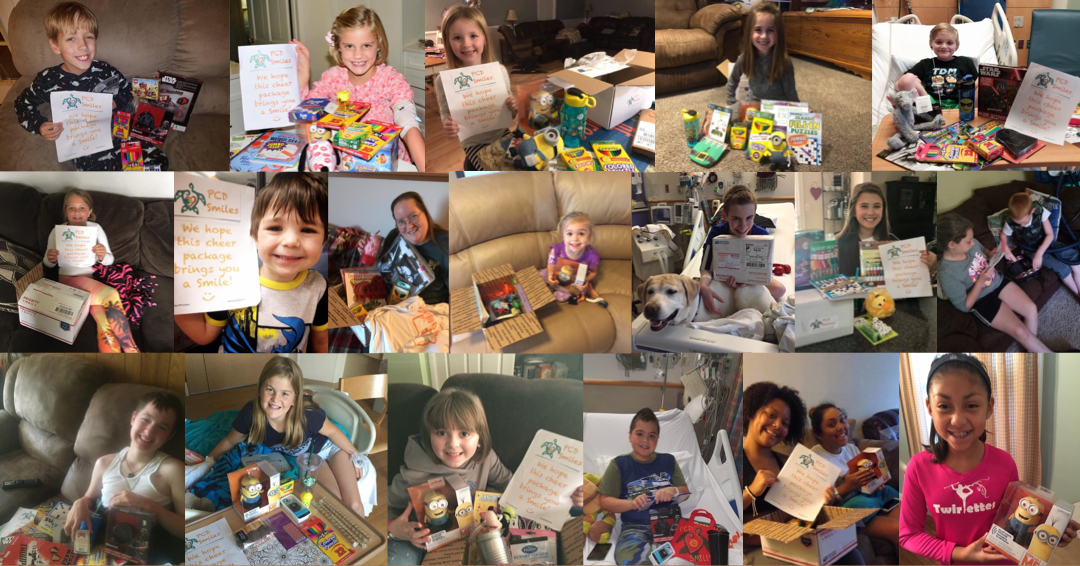
- Or sponsor a PCD Smiles cheer package today!
- To shop for your “Official” turtle care ribbon gear today, visit PCD Style
Thank you for your consideration!
Medical Disclaimer
This article is intended for general educational and informational purposes only and is not a substitute for professional medical advice, diagnosis, or treatment. Infection risks and appropriate prevention strategies can vary considerably between people with PCD based on their lung health, respiratory cultures, treatments, age, and other medical conditions.
This article is for educational purposes and does not establish that over-thinning mucus causes increased infection risk in people with PCD. Responses to airway-clearance and mucoactive therapies vary. Any changes to prescribed treatments should be discussed with a healthcare professional familiar with PCD.
Cleaning and disinfection recommendations for respiratory equipment can also vary by device and manufacturer. Always follow the instructions provided by your healthcare team and equipment manufacturer.
Do not start, stop, or change medications, airway-clearance treatments, infection-control practices, or other aspects of your medical care based solely on this article. If you have PCD and are concerned about an infection, worsening respiratory symptoms, or possible exposure to a pathogen, contact your PCD or respiratory healthcare team for individualized guidance.
If you are experiencing severe or rapidly worsening breathing difficulties or another medical emergency, seek urgent medical attention.