

Sometimes, the strongest thing a person with PCD can do is slow down.
For most people, being tired means getting a good night's sleep, taking a day off, or simply pushing through until they feel better.
For someone living with Primary Ciliary Dyskinesia (PCD), exhaustion can be something entirely
different.
There are days when the body simply says:
“Stop. Get inside your shell. Rest.”
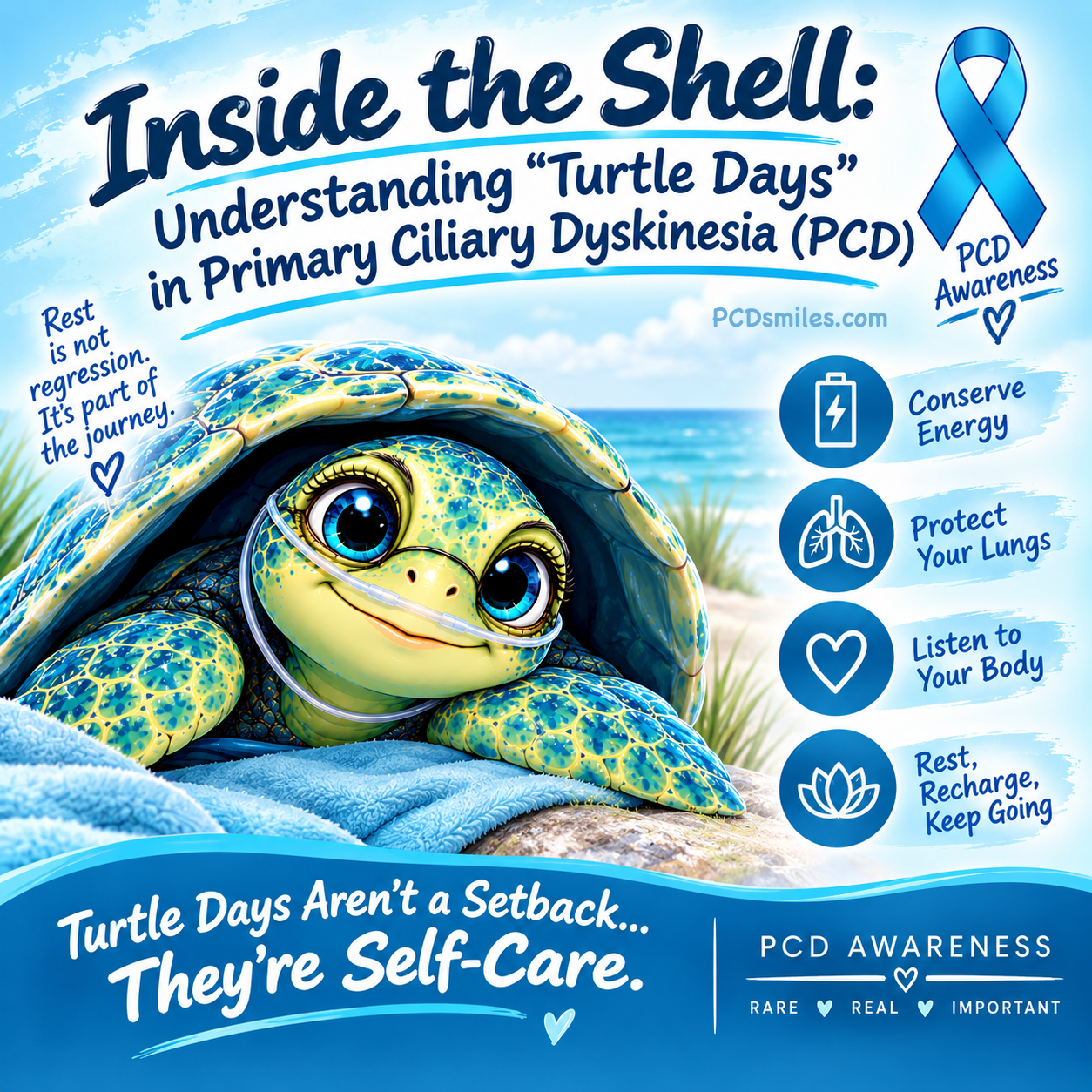
Within the PCD community, these days are often called “Turtle Days.”
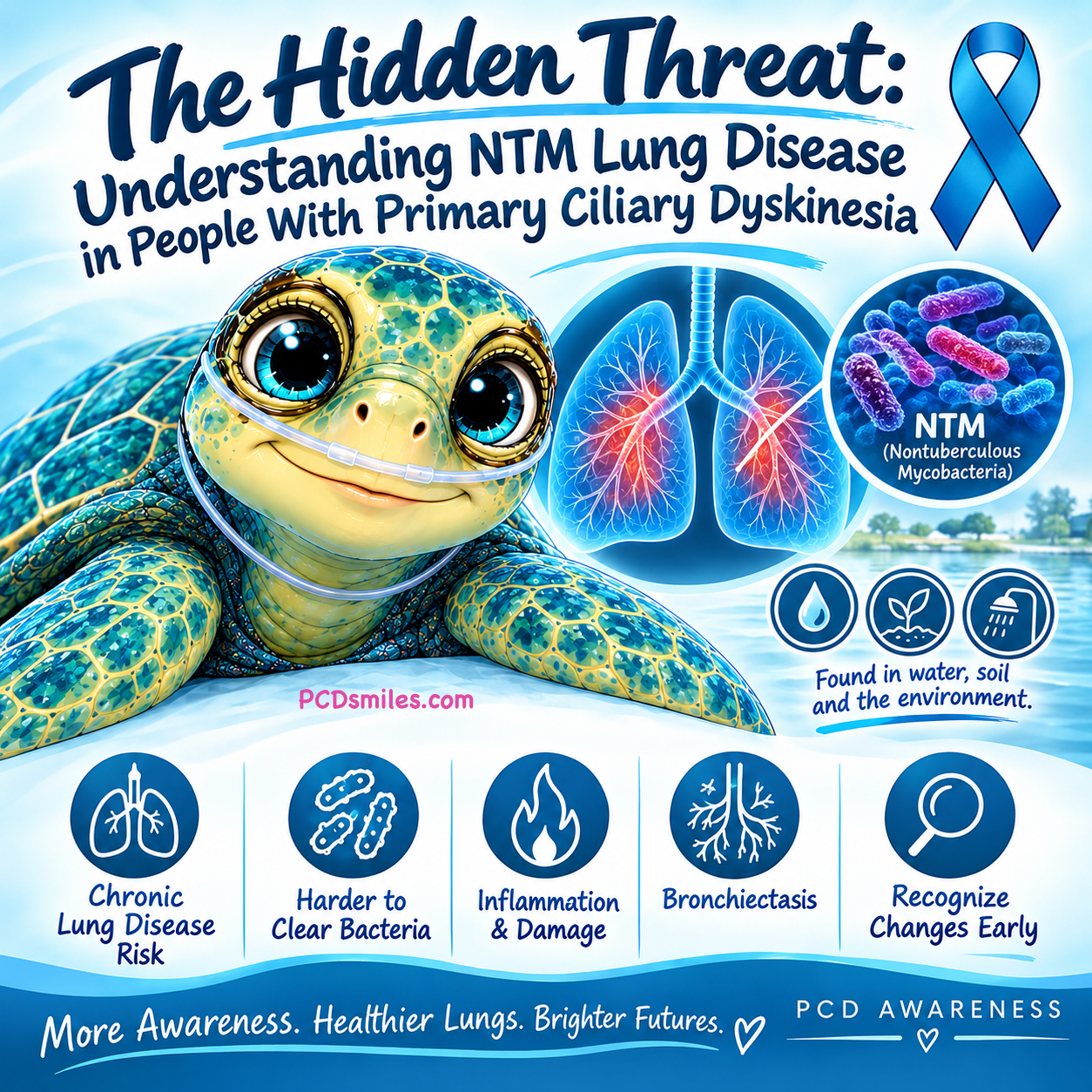
The name is fitting. The turtle has become a meaningful symbol for many people living with PCD—representing slowing down, conserving energy, resilience, and knowing when it is necessary to retreat into your shell.
A Turtle Day isn't laziness.
It isn't lack of motivation.
It isn't someone being antisocial.
And it isn't simply having a bad day.
It can be the visible result of an invisible disease that requires the body to work harder every single day.
What Exactly Is a “Turtle Day”?
“Turtle Day” is a term used within parts of the PCD community to describe a day when the physical demands of living with PCD become overwhelming and a person needs to slow down, rest, and conserve energy.
It is not a formal medical diagnosis or a specific clinical term.
People may also describe similar experiences as a PCD crash, flare day, PCD hangover, or simply having a particularly difficult PCD day.
There is no single definition because PCD affects people differently.
For some, a Turtle Day may mean spending most of the day resting.
For someone else, it might mean canceling plans, reducing activities, taking more breaks, or doing only the things that absolutely have to get done.
And sometimes, a Turtle Day can be the body's warning that something else is happening—such as an infection or worsening respiratory symptoms.
That's why these days deserve to be understood rather than dismissed.
To Understand Turtle Days, You Have to Understand PCD
PCD is a rare inherited genetic disorder that affects motile cilia—microscopic structures that help move mucus and other material through the respiratory tract.
In healthy airways, cilia beat in coordinated patterns to help move mucus containing bacteria, dust, and debris toward the throat, where it can be cleared.
With PCD, cilia don't function normally.
As a result, mucus can remain in the airways and sinuses, making it harder for the body to clear bacteria and other particles
.
This can contribute to:
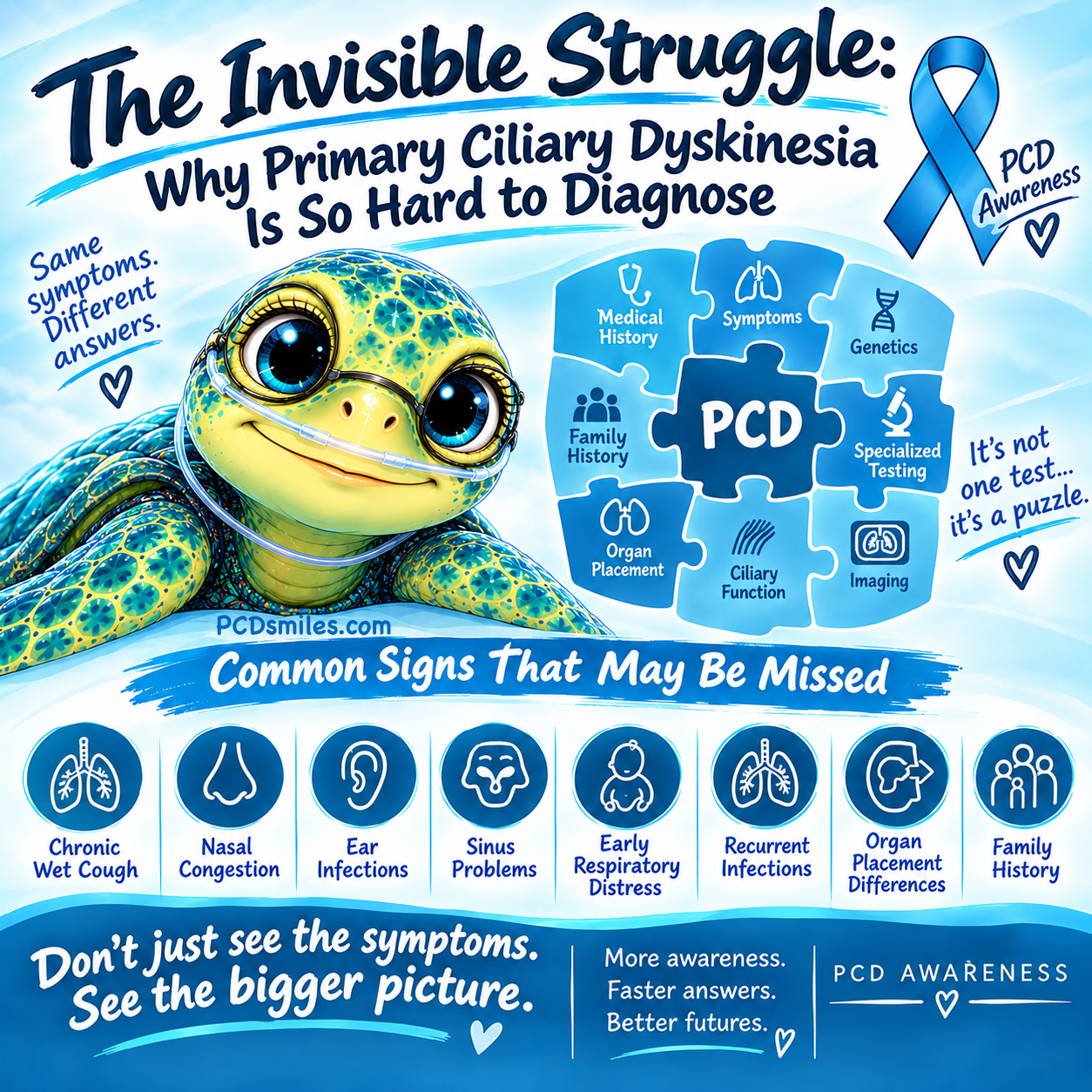
- Chronic wet cough
- Chronic nasal congestion and sinus disease
- Recurrent respiratory infections
- Middle-ear disease
- Bronchiectasis
- Shortness of breath or reduced exercise tolerance
- Repeated courses of antibiotics or other treatments
PCD is also a multisystem condition, meaning its effects aren't limited to the lungs.
And while the disease may be invisible to everyone around the person, the work required to manage it is very real.
The Body Never Gets to “Turn Off”
One of the hardest things about PCD is that respiratory care doesn't happen only when someone feels sick.
Airway clearance is often part of everyday life.
Depending on the individual's treatment plan, that may include:
- Airway-clearance techniques
- Nebulized medications or saline
- High-frequency chest-wall oscillation
- Oscillation and Lung Expansion devices
- PEP or OPEP devices
- Antibiotics when infections occur
- Exercise when appropriate
- Regular pulmonary monitoring
And that's before dealing with work, school, family responsibilities, appointments, errands, social activities, and everything else that makes up everyday life.
For someone with PCD, breathing and keeping the airways clear can require a significant amount of ongoing effort.
So when the body finally runs out of energy, the person may have no choice but to retreat into their shell.
What Does a Turtle Day Feel Like?
There isn't one universal Turtle Day.
PCD can look very different from one person to another, and the experience can change from day to day.
But someone experiencing a difficult PCD day may describe things like:
Crushing fatigue
Not simply being sleepy.
Not just needing a cup of coffee.
It can feel like the body's energy supply has been completely drained.
Simple activities may suddenly feel enormous.
Getting dressed.
Taking a shower.
Making food.
Going to work.
Walking across the house.
Even talking can feel like work.
Heavy lungs
Mucus may feel harder to move.
The chest may feel congested.
Coughing can become more frequent or exhausting.
Airway-clearance treatments may feel like a monumental task—even though they remain important.
Increased respiratory symptoms
A person may notice more coughing, congestion, drainage, sinus pressure, or other symptoms than usual.
Sometimes this is simply a particularly difficult day.
Other times, it can be a sign that an infection or exacerbation is developing.
Mental exhaustion
Living with a chronic disease requires constant decision-making.
When should I do my treatment?
Do I have enough energy to go to work?
Can I attend this event?
Should I cancel?
Is this normal fatigue—or am I getting sick?
Do I need to call my doctor?
That mental load can be exhausting all by itself.
Why Can a Person With PCD Be Fine One Day and a “Turtle” the Next?
This is one of the hardest things for other people to understand.
Someone with PCD may look completely fine on Monday.
They may go to work.
Run errands.
Attend a family gathering.
Laugh with friends.
Go shopping.
Then Tuesday arrives—and they are barely functioning.
That doesn't necessarily mean they were pretending to feel well on Monday.
It may mean that their body had enough energy for Monday and not enough for Tuesday.
People with chronic illnesses often become very good at appearing functional.
They may carefully plan their activities.
They may rest before an important event.
They may push themselves because something matters to them.
And then they may pay for that activity afterward.
This is sometimes described as “payback” or a post-exertional crash, although the experience and terminology vary from person to person.
The important point is that one good day doesn't mean the disease disappeared.
What Can Trigger a Turtle Day?
There isn't one universal trigger.
Several things may contribute, including:
Infection
A respiratory infection can dramatically increase the body's workload.
More mucus.
More coughing.
More inflammation.
More airway clearance.
More energy required to breathe and recover.
Sometimes unusual fatigue may be one of the first signs that someone is becoming ill.
Increased mucus burden
When mucus becomes more difficult to clear, the body has to work harder to move it.
That can make coughing and airway clearance exhausting.
The workload of airway clearance
Airway clearance is essential—but it also takes energy.
A person may be physically exhausted after completing a treatment session, particularly when already sick.
That doesn't mean the treatment is harmful or unnecessary.
It means the treatment itself can be physically demanding.
Environmental changes
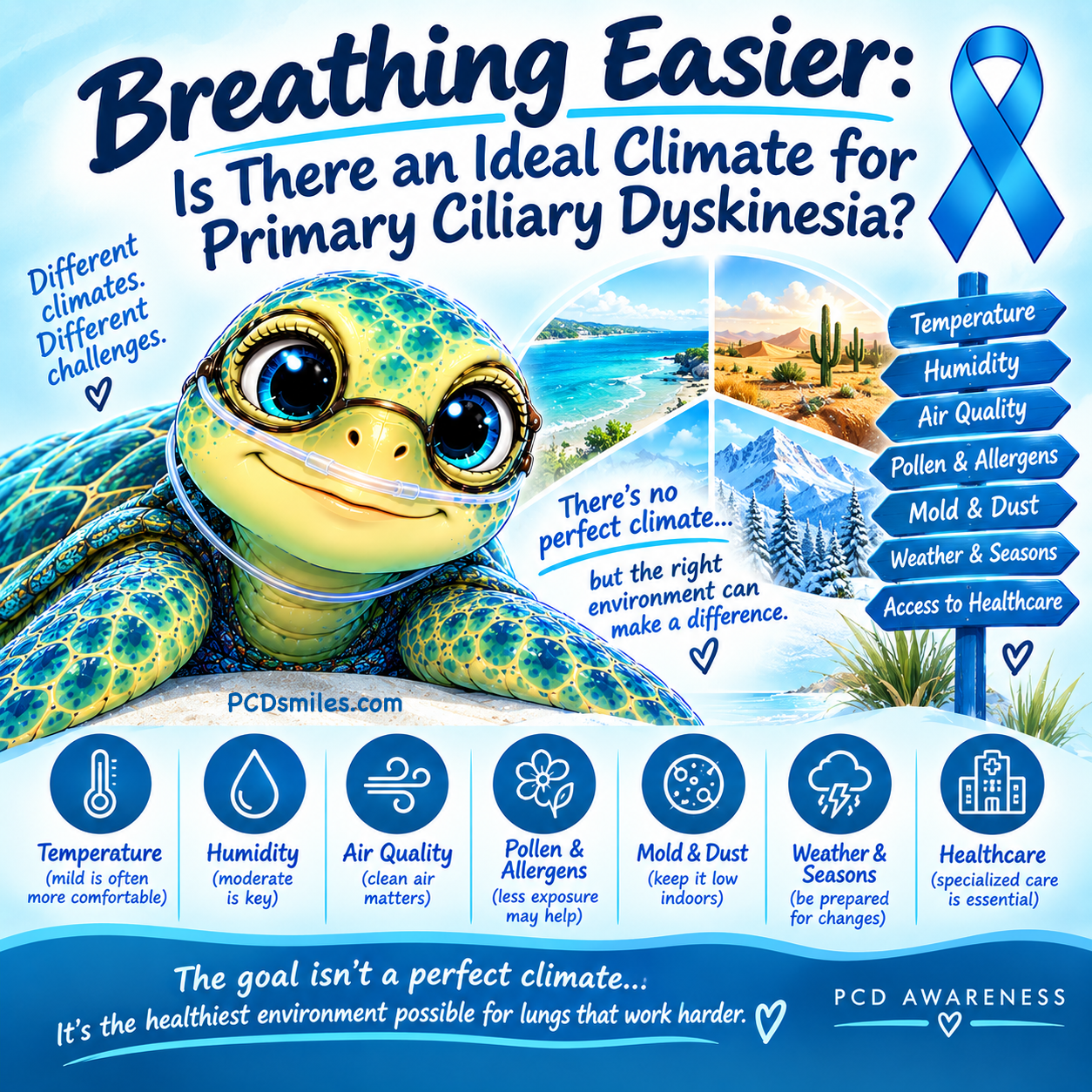
Weather changes, poor air quality, smoke, allergens, and other environmental factors may worsen respiratory symptoms for some people.
Accumulated fatigue
Sometimes there isn't one obvious trigger.
The body may simply reach a point where accumulated physical and mental demands become too much.
A Turtle Day Doesn't Always Mean an Infectione
This is an important distinction.
A person with PCD may have an exhausting day without having a bacterial infection.
Fatigue alone cannot tell someone what is happening inside the lungs.
At the same time, a significant change from a person's normal baseline shouldn't automatically be dismissed as “just a Turtle Day.”
A new or worsening cough, increased sputum, fever, shortness of breath, chest pain, declining oxygen levels, or other concerning changes may require medical evaluation.
People with PCD often become very familiar with their own baseline.
That knowledge can be valuable.
When something feels significantly different, it's worth paying attention.
Why “Just Rest” Isn't Always the Answer
When someone sees a person completely exhausted, the obvious advice may be:
“You need to rest.”
And rest can absolutely be important.
But PCD adds another layer.
The person may be exhausted and still need to perform their prescribed airway-clearance treatments.
That can create an incredibly frustrating situation:
“I'm too exhausted to do my treatment—but I need my treatment because I'm exhausted and congested.”
This is one of the realities that can be difficult for people without PCD to understand.
The solution isn't necessarily to push through everything.
It also isn't necessarily to stop everything.
Instead, people with PCD generally need to work with their healthcare team to understand how to
manage airway clearance, medications, activity, and rest when they are having a difficult day or becoming ill.
Turtle Days Are About Energy Conservation
One of the most important lessons of the turtle is pacing.
A person with PCD may have a limited amount of energy available on a particular day.
The question becomes:
Where does that energy need to go?
Maybe it goes toward airway clearance.
Maybe it goes toward getting to work.
Maybe it goes toward caring for children.
Maybe it goes toward a medical appointment.
Maybe the most important thing that day is simply getting enough rest to recover.
This means some things may have to wait.
Laundry can wait.
Cleaning can wait.
Social plans can wait.
Nonessential errands can wait.
Sometimes the most productive thing a person can do is nothing.
“But You Look Fine”
This may be one of the most painful parts of living with an invisible disease.
A person can have significant lung disease and still look perfectly healthy.
There may be:
No cast.
No wheelchair.
No visible injury.
No obvious sign that the lungs are working overtime.
Someone may smile while feeling terrible.
They may answer, “I'm okay,” because explaining everything is exhausting.
They may cancel plans without having the energy to explain why.
They may go to work while feeling awful because they cannot afford to stay home.
And when they finally reach their limit, someone may wonder:
“Why can't you just push through?”
Because sometimes there is nothing left to push with.
Turtle Days Are Not a Character Flaw
A Turtle Day isn't a failure.
It isn't weakness.
It isn't laziness.
It isn't being dramatic.
It isn't choosing not to participate in life.
Sometimes it is the opposite.
Sometimes retreating into the shell is how a person protects their ability to keep participating in life.
Rest can be part of disease management.
Pacing can be part of disease management.
Knowing when to say no can be part of disease management.
And accepting help can be part of disease management.
What Can Family and Friends Do?
You don't have to understand every aspect of PCD to support someone having a Turtle Day.
A few simple things can make a tremendous difference.
Believe them.
If someone says they are exhausted, believe them—even if they look fine.
Don't pressure them to push through.
“Come on, you'll feel better if you get moving” isn't always helpful.
Make resting feel okay.
Let them know they don't have to apologize for taking care of themselves.
Help with practical things.
A meal, a ride, childcare, groceries, or household chores can conserve precious energy.
Don't take cancellations personally.
A canceled plan doesn't mean someone doesn't want to spend time with you.
Respect their medical routine.
Airway clearance and other treatments may not be optional simply because someone is tired.
Encourage medical care when symptoms are concerning.
If someone is significantly worse than their normal baseline, support them in contacting their healthcare team.
What Employers and Schools Need to Understand
Turtle Days can be especially difficult in environments where attendance and productivity are treated as the only measures of ability.
A person with PCD may be highly capable.
They may be hardworking.
They may rarely complain.
They may perform exceptionally well.
And they may still occasionally need time to recover.
Flexible scheduling, remote-work options when appropriate, reasonable accommodations, and understanding around medical appointments can make an enormous difference.
The goal isn't to give someone an excuse to avoid responsibilities.
It's to recognize that a chronic medical condition can fluctuate.
The Emotional Side of Retreating Into the Shell
There is also an emotional component to Turtle Days.
It can be frustrating to watch everyone else continue with normal life while your body tells you to stop.
It can feel isolating.
It can be disappointing to cancel plans.
It can be difficult to explain to people why you can't simply “try harder.”
And it can be discouraging when a good day is followed by a terrible one.
People with PCD may have to repeatedly adjust expectations around what their bodies can do.
That doesn't mean giving up.
It means learning to work with the body rather than constantly fighting against it.
The Turtle Is More Than a Mascot
The turtle has become a meaningful symbol within parts of the PCD community for a reason.
A turtle doesn't move quickly just because the world expects it to.
It carries its home with it.
It protects itself by retreating into its shell.
And it keeps moving forward at its own pace.
That symbolism resonates with people living with PCD.
There are days to move forward.
There are days to accomplish things.
There are days to laugh, travel, work, socialize, and enjoy life.
And there are days when the shell is necessary.
Both kinds of days are part of living with PCD.
Understanding Turtle Days Means Understanding the Invisible Work
PCD doesn't take a day off.
The lungs don't stop producing mucus.
The cilia don't suddenly start working normally.
The risk of infection doesn't disappear.
And the need for airway clearance doesn't vanish simply because someone is exhausted.
Every day, a person with PCD may be doing an enormous amount of work that nobody else can see.
So when you see someone with PCD retreat into their shell, remember:
They may not be giving up.
They may be recharging.
They may be protecting their lungs.
They may be listening to their body.
They may be conserving enough energy to come back tomorrow.
Sometimes, slowing down is part of moving forward.
The Next Time You Hear “I'm Having a Turtle Day…”
Don't assume it means:
“I don't want to.”
It may mean:
“I can't right now.”
It may mean:
“My body has reached its limit.”
It may mean:
“I need to protect my energy today so I can have some tomorrow.”
And sometimes, it may simply mean:
“I need to go inside my shell for a little while.”
For the PCD community, Turtle Days are a reminder that invisible illness is still illness—and that rest is not something a person should have to earn.
PCD may make life move at a different pace. Turtle Days remind us that slow doesn't mean weak, resting doesn't mean quitting, and retreating into your shell doesn't mean you're giving up.
Sometimes, it's how you keep going.
Be sure to join us tomorrow for another conversation about primary ciliary dyskinesia.
Join our Facebook group Turtle Talk Café today.
We have several ways that you can donate to PCD Smiles;
- Visit Smile E. Turtle's Amazon Wishlist
- For more information on how you can donate, please visit our "Donation" page to check out our "Do & Don't policies.
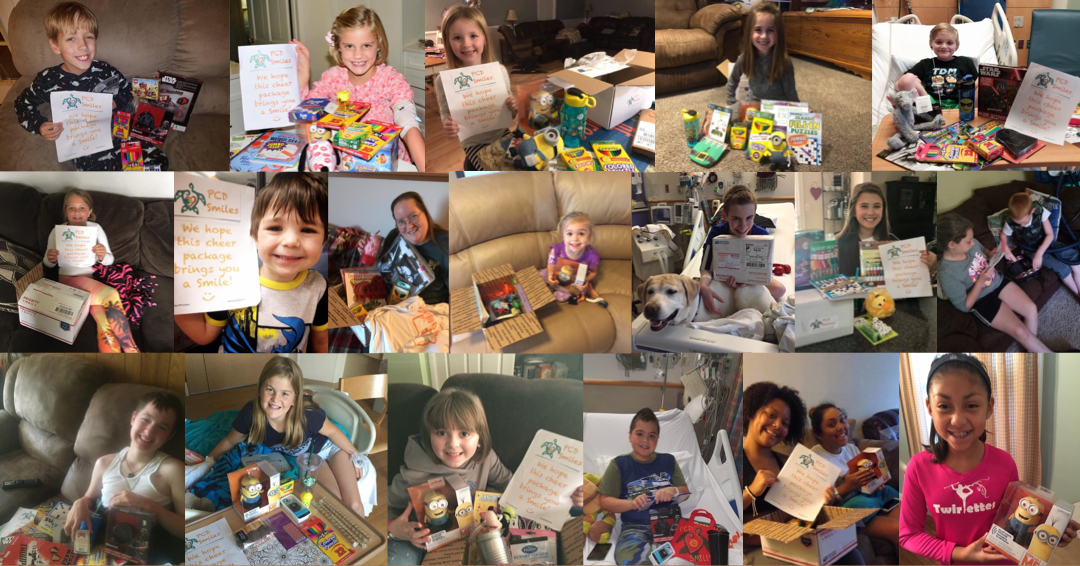
- Or sponsor a PCD Smiles cheer package today!
- To shop for your “Official” turtle care ribbon gear today, visit PCD Style
Thank you for your consideration!
Medical Disclaimer
This article is intended for general educational and informational purposes only and is not a substitute for professional medical advice, diagnosis, or treatment. Infection risks and appropriate prevention strategies can vary considerably between people with PCD based on their lung health, respiratory cultures, treatments, age, and other medical conditions.
This article is for educational purposes and does not establish that over-thinning mucus causes increased infection risk in people with PCD. Responses to airway-clearance and mucoactive therapies vary. Any changes to prescribed treatments should be discussed with a healthcare professional familiar with PCD.
Cleaning and disinfection recommendations for respiratory equipment can also vary by device and manufacturer. Always follow the instructions provided by your healthcare team and equipment manufacturer.
Do not start, stop, or change medications, airway-clearance treatments, infection-control practices, or other aspects of your medical care based solely on this article. If you have PCD and are concerned about an infection, worsening respiratory symptoms, or possible exposure to a pathogen, contact your PCD or respiratory healthcare team for individualized guidance.
If you are experiencing severe or rapidly worsening breathing difficulties or another medical emergency, seek urgent medical attention.