



Adding inhaled saline to an airway clearance routine may make mucus easier to move and cough out for some people with primary ciliary dyskinesia (PCD). It can also cause irritation, add work, or offer little noticeable benefit. The best approach is one chosen and reviewed with a knowledgeable PCD care team.
Airway clearance can be one of the most familiar—and time-consuming—parts of living with PCD. Some people use breathing exercises, handheld devices, manual chest techniques, or a treatment vest. Others combine one or more of these approaches with
a nebulized solution.
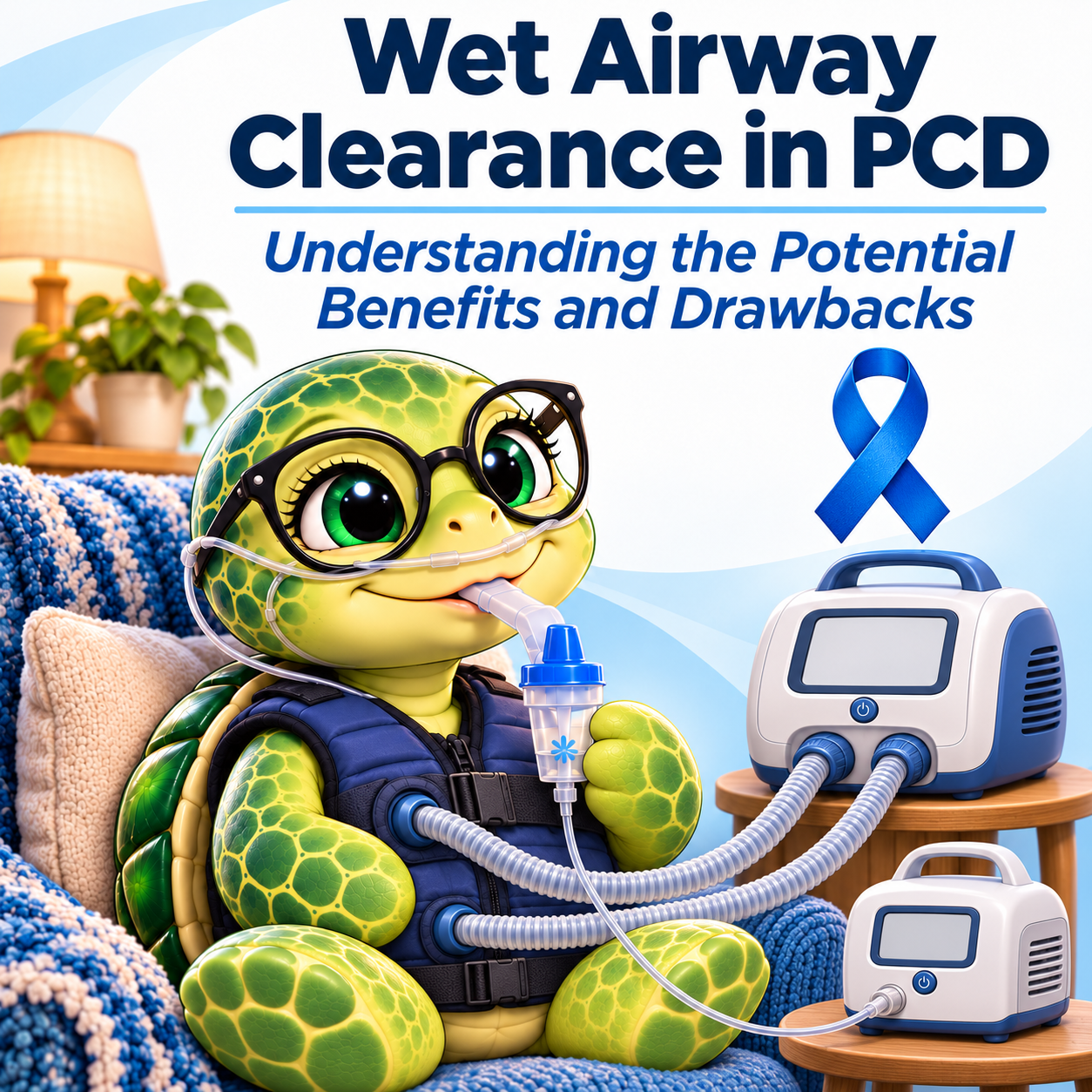
You may have heard someone describe the latter as “wet airway clearance.” The phrase can be useful in conversation, but it does not describe one standardized treatment. Different people and care teams may use it differently. In this article, it means using an inhaled solution, most often nebulized saline, as part of an airway clearance routine—before or, when appropriate, during the clearance technique.
The idea can sound straightforward: add moisture, loosen mucus, and help it move. But whether a particular approach helps depends on the person, the solution, the equipment, and how well the treatment is tolerated. It is also important to separate what makes sense in theory from what research has actually demonstrated in people with PCD.
PCD Snapshot: Why Airway Clearance Matters
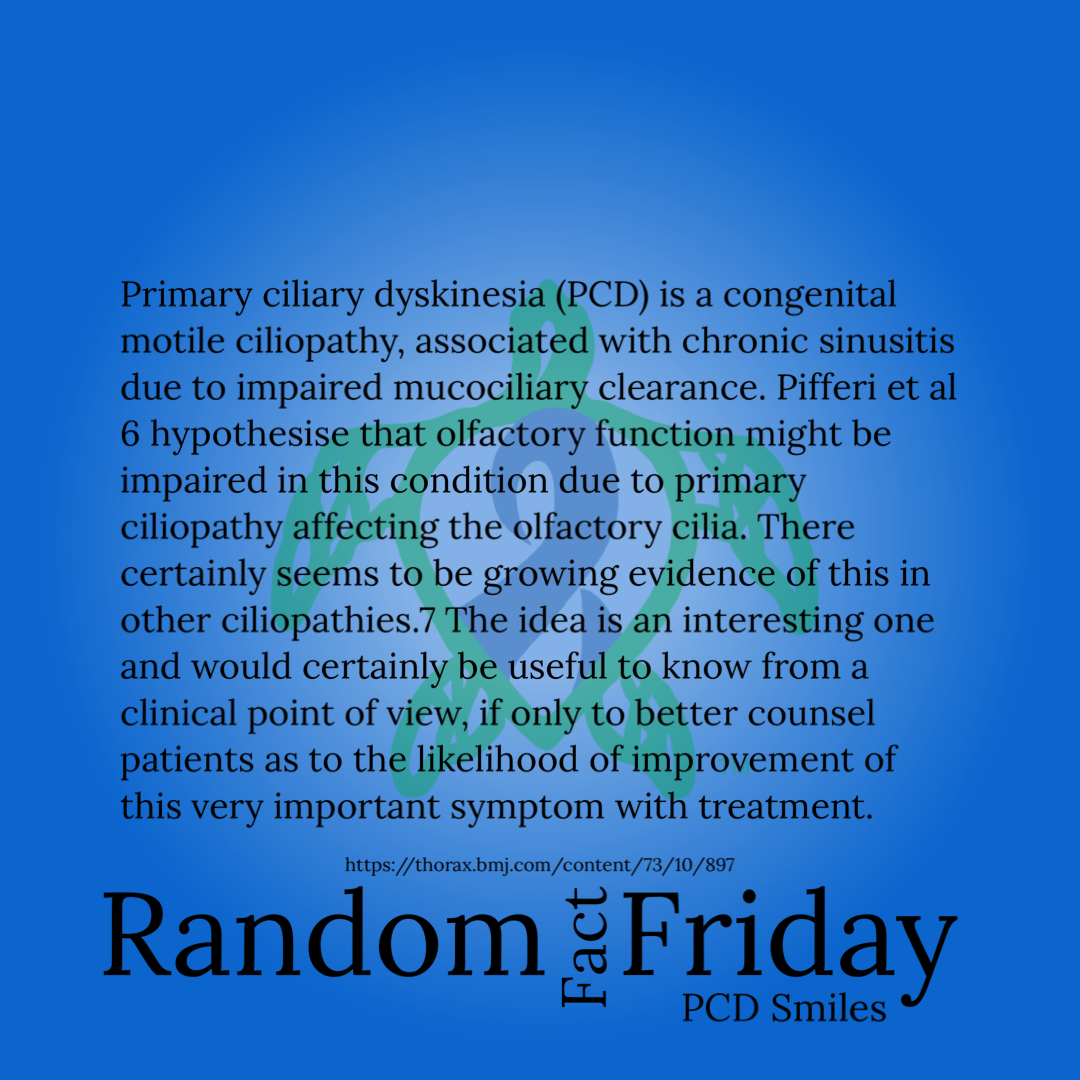
Primary ciliary dyskinesia is a rare genetic disorder that affects motile cilia, the tiny moving structures that normally help transport mucus out of the respiratory tract.
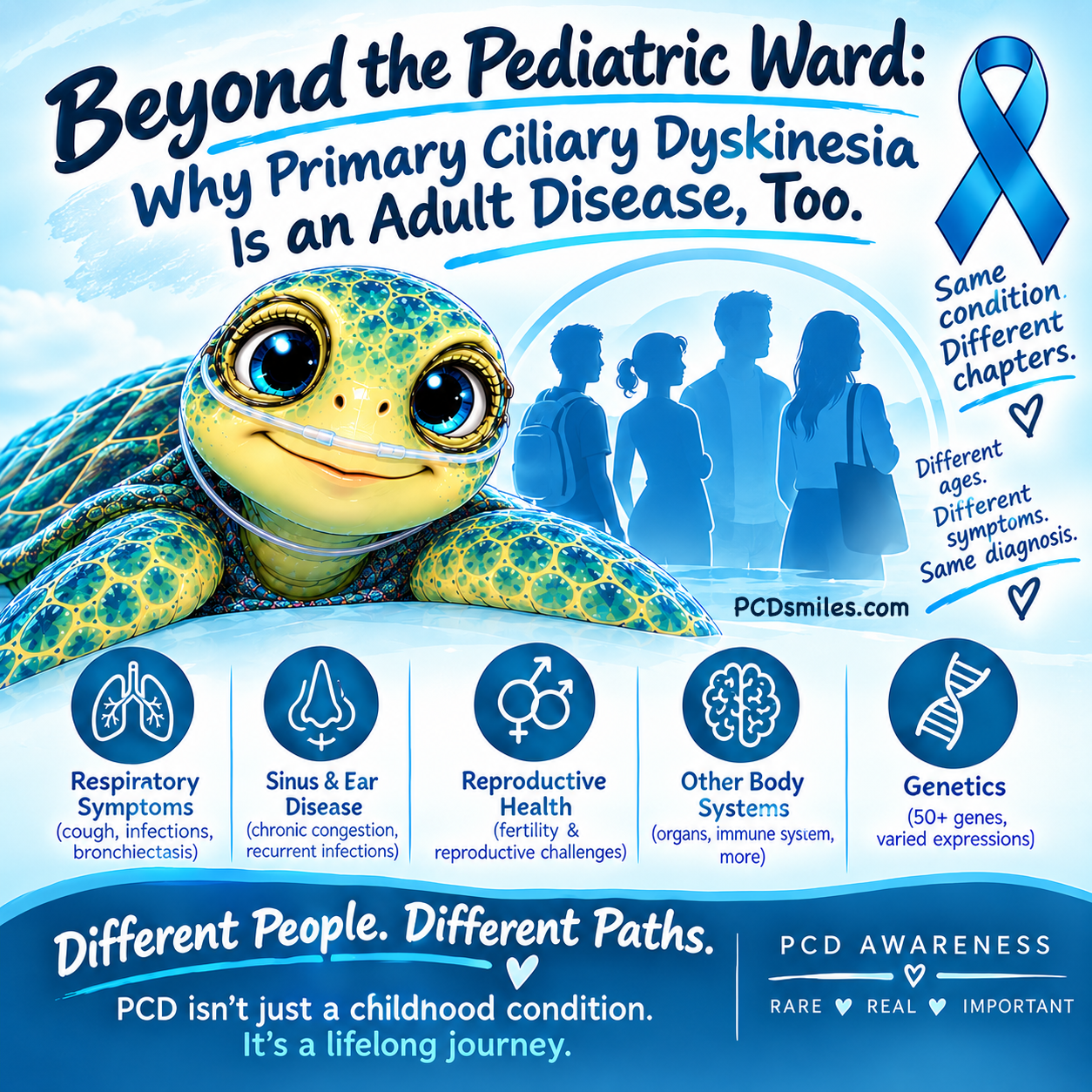
When these cilia do not work effectively, mucus and the particles and germs caught in it can be harder to clear. People with PCD may experience a persistent cough, respiratory infections, sinus problems, ear and hearing difficulties, and other effects. The severity and combination of symptoms vary from person to person.
Airway clearance techniques are used to help move mucus so it can be coughed or otherwise cleared from the lungs. They are an established part of PCD care, although there is limited evidence identifying one technique or combination as best for everyone. A specialist physiotherapist or respiratory therapist can help tailor a routine to a person’s needs, abilities, and preferences. European Respiratory Society
What Makes Airway Clearance “Wet”?
In the sense used here, “wet” refers to adding an inhaled solution to the routine. The solution is generally delivered as a fine mist by a nebulizer.
Two types of saline may come up in a conversation with a care team:
- Isotonic saline, sometimes called normal saline, has a salt concentration similar to that of body fluids.
- Hypertonic saline contains a higher concentration of salt. It is intended to draw water toward the airway surface, which may help hydrate secretions and make them easier to clear.
Saline may be used before a clearance session or combined with a compatible technique or device during a session when the care team recommends it. Not every nebulizer and airway clearance device can be safely or effectively connected, and not every inhaled medication is intended to be combined with another treatment.
“Wet” also does not mean that the treatment uses tap water, homemade mixtures, or essential oils. Only use the solution prescribed or recommended for inhalation by the treating clinician.
A person can have a productive, mucus-clearing session without nebulized saline. Likewise, inhaling saline alone does not necessarily replace the breathing, coughing, or other clearance techniques in an individual’s care plan. acprc.org.uk
The Potential Pros
1. Mucus May Be Easier to Move and Cough Out
One reason clinicians consider inhaled saline is to help people clear secretions that are difficult to bring up.
Hypertonic saline is intended to increase water at the airway surface. For some people, this may make mucus easier to mobilize or expectorate—that is, cough out. Saline can also stimulate coughing, which may help some people clear secretions but may feel irritating to others.
The practical benefit may be something a person notices during or after a session: less effort to bring up mucus, a more productive cough, or a feeling that the airways are clearer. These experiences matter, although they do not by themselves prove that a treatment prevents future infections or lung damage. acprc.org.uk
2. It May Give the Care Team Another Way to Personalize Treatment
PCD does not look or feel the same in every person. The amount of mucus, the ease of coughing it out, other health conditions, and tolerance for inhaled treatments can all differ.
For someone who struggles to clear secretions, a clinician may consider a trial of saline alongside airway clearance. Someone who cannot tolerate hypertonic saline may be assessed for another option, such as isotonic saline. Whether either approach is appropriate depends on the individual.
This flexibility can be valuable when a routine that looks reasonable on paper is not working well in everyday life. acprc.org.uk
3. Combining Treatments May Reduce Time for Some People
For some patients, a care team may recommend combining nebulized saline with a compatible airway clearance device or technique. If both treatments can be delivered effectively at the same time, the routine may take less time than doing each separately.
That potential matters. A “treatment session” can include gathering supplies, preparing medication, setting up equipment, completing therapy, coughing out mucus, cleaning equipment, and allowing time to recover. Reducing even one part of that workload may make the day more manageable.
But combining treatments does not automatically save time or improve effectiveness. Some people may need to pause frequently to cough, find the combined session uncomfortable, or use equipment that is not designed to work together. The treating team should assess the actual setup and technique. acprc.org.uk
4. A Trial Can Help Identify What Is Useful
A supervised or clinician-guided trial can provide useful information. The person and their care team can discuss questions such as:
- Is mucus easier to bring up?
- Does the treatment cause excessive coughing or chest tightness?
- Does the person feel better afterward, worse, or about the same?
- Does it fit into daily life?
- Is the added effort worthwhile to the person doing it?
A treatment does not have to look impressive or produce a dramatic amount of mucus to deserve a thoughtful review. Likewise, a treatment that adds a significant burden without an identifiable benefit deserves discussion.
The Potential Cons and Limitations
1. Saline Can Irritate Sensitive Airways
Inhaled saline—particularly hypertonic saline—can cause coughing, throat irritation, wheezing, chest tightness, or a feeling of shortness of breath in some people.
Airways can also narrow in response to the inhaled solution. This is called bronchoconstriction. Some people with PCD also have asthma or sensitive airways, making individual assessment especially important.
A clinician may recommend observing and assessing the first dose of hypertonic saline and may consider a prescribed bronchodilator in certain circumstances. A bronchodilator is a medication that helps open the airways. It is not automatically necessary for everyone.
New or significant breathing difficulty should not be dismissed as something a person simply has to tolerate. Follow the care team’s instructions for concerning symptoms and seek urgent medical help for severe or rapidly worsening breathing trouble. acprc.org.uk
2. More Coughing Is Not Always More Effective Clearance
Coughing can help move mucus, but frequent, forceful coughing can also be tiring or uncomfortable. It may interrupt a treatment session, contribute to soreness, or make it difficult to complete the intended breathing technique.
Bringing up more mucus during a particular session may be useful, but the amount alone does not tell the whole story. Hydration, illness, time of day, recent activity, and other factors can affect what someone produces.
The goal is effective, tolerable clearance—not coughing as much as possible.
3. It Can Add to Treatment Burden
A nebulized treatment may require additional supplies, preparation, cleaning, replacement parts, storage space, and access to a power source or charged equipment.
For families, there may also be the work of coordinating treatment around school, childcare, work, travel, meals, and sleep. Someone who already spends substantial time managing PCD may reasonably ask whether another step offers enough benefit to justify its demands.
That question is not a sign of poor commitment. Time, energy, comfort, cost, and equipment access are legitimate parts of treatment decisions.
4. Equipment Cleaning Matters
Nebulizer equipment can become contaminated if it is not cleaned and disinfected appropriately. Because people with PCD may be vulnerable to respiratory infections, the care and storage of equipment are important parts of the treatment—not an optional afterthought.
Ask the care team and equipment supplier for instructions specific to the nebulizer and its components, including how to clean, disinfect, dry, and replace them. Different devices and materials may have different requirements.
If the recommended process is difficult to manage because of time, physical limitations, supplies, or cost, bring that up. A plan needs to be realistic enough to carry out safely. PMC
5. The PCD-Specific Evidence Is Limited
Airway clearance is widely recommended in PCD, but that does not mean every variation has been proven equally effective—or that adding saline has been shown to improve every important outcome.
A small randomized study in adults with PCD compared inhaled hypertonic saline with isotonic saline. It did not show a clear improvement in its primary overall quality-of-life measure, though some secondary findings suggested possible benefit. The study was small, and its results do not settle whether particular individuals may benefit.
Research has not established that wet airway clearance is universally better than clearance without nebulized saline, or that it reliably prevents infections, hospitalizations, or progression of lung disease in everyone with PCD. Some treatment practices draw on evidence from other respiratory conditions as well as clinical experience; those findings cannot automatically be assumed to apply in the same way to PCD. PMC
Limited evidence does not mean that a treatment cannot help. It means patients and clinicians should be honest about what is known, pay attention to individual response, and continue asking better research questions.
6. It May Not Be Suitable at Every Time or for Every Person
A treatment that works well during a stable period may need review when circumstances change. Increased symptoms, a new diagnosis, surgery, a change in respiratory support, medication side effects, or difficulty tolerating a device can all prompt a conversation with the care team.
Some symptoms—such as coughing up blood, significant chest pain, or worsening breathlessness—may require individualized assessment and guidance about airway clearance. Do not assume that the usual routine should be intensified, stopped, or changed without contacting the treating team.
Does “Wetter” Mean Better?
No. More saline, a stronger concentration, or a longer session is not automatically more effective.
The concentration and timing that a clinician recommends depend on the person and their response. A solution that another person finds helpful might trigger uncomfortable coughing or airway narrowing for someone else.
The same principle applies to equipment: using several devices together does not guarantee a better result. A workable plan considers whether each part has a purpose, whether the equipment is compatible, and whether the person can use it comfortably and correctly.
Should Saline Be Used Before or During Airway Clearance?
There is no single answer that fits everyone.
Some people are advised to use nebulized saline before their clearance technique. Others may combine saline with an appropriate device or treatment session. The decision can depend on the prescribed medication, the device, how a person breathes and coughs during treatment, and whether combining steps affects delivery or comfort.
If inhaled antibiotics or other medicines are also part of the routine, ask the care team how those treatments should be timed. Do not mix medicines or connect devices unless the prescribing team and equipment instructions support that setup.
PCD physiotherapy guidance recommends giving individualized advice about saline timing and considering combined treatment when appropriate to reduce treatment burden. acprc.org.uk
Questions to Bring to Your PCD Care Team
A productive conversation might begin with the question: “What are we hoping this part of my routine will do for me, and how will we know whether it is helping?”
You might also ask:
- Would isotonic or hypertonic saline be appropriate for me, and why?
- Do I need an observed first dose or assessment for airway narrowing?
- Which side effects should I report, and what should I do if they occur?
- Should I use saline before or during my airway clearance technique?
- Are my nebulizer and airway clearance device compatible?
- How should I clean, disinfect, dry, and replace the equipment?
- How will we assess whether the extra treatment is worth the time and effort?
- What should I do if my symptoms change or I cannot complete the routine?
- When should we review the plan?
If possible, demonstrate your actual routine and equipment to the clinician or respiratory therapist. Describing a treatment and showing how it works in practice can reveal different challenges.
Making Room for Individual Experience
One person may find that saline helps them clear mucus with less effort. Another may find that it triggers uncomfortable coughing, takes too long, or makes no meaningful difference. A third may need a different approach altogether.
All of those experiences deserve attention.
Children and adults may also need different equipment, support, and teaching. Caregivers may be responsible for preparing and cleaning devices, while the person receiving treatment lives with its physical sensations. Both perspectives can help the care team understand whether a plan is sustainable.
Airway clearance is a medical task, but it happens inside a life that also includes school, work, relationships, rest, and activities that matter. A good care plan should take that whole life into account.
Key Message
Wet airway clearance may be a helpful option for some people with PCD, but it is not automatically better for everyone. The most useful routine is one that supports effective mucus clearance, is tolerated well, and can be carried out consistently—with the guidance of a qualified PCD care team.
Sources and Further Reading
- Physiotherapy English national standards of care for children and young people with primary ciliary dyskinesia — Association of Chartered Physiotherapists in Respiratory Care.
- Primary ciliary dyskinesia: a national expert consensus statement on standards of care — European Respiratory Society.
- PCD Foundation consensus recommendations — Diagnosis, monitoring, and treatment of primary ciliary dyskinesia.
Be sure to join us next Thursday for another conversation about primary ciliary dyskinesia.
Join our Facebook group Turtle Talk Café today.
We have several ways that you can donate to PCD Smiles;
- Visit Smile E. Turtle's Amazon Wishlist
- For more information on how you can donate, please visit our "Donation" page to check out our "Do & Don't policies.
- Or sponsor a PCD Smiles cheer package today!
- To shop for your “Official” turtle care ribbon gear today, visit PCD Style
Thank you for your consideration!
This article is for educational and awareness purposes only and is not a substitute for professional medical advice, diagnosis, or treatment. Health needs and treatment plans vary from person to person. Consult your PCD care team or another qualified healthcare professional about your individual circumstances, and do not start, stop, or change medicines, devices, or treatments based on this article. Never disregard professional medical advice or delay seeking it because of something you have read here.