
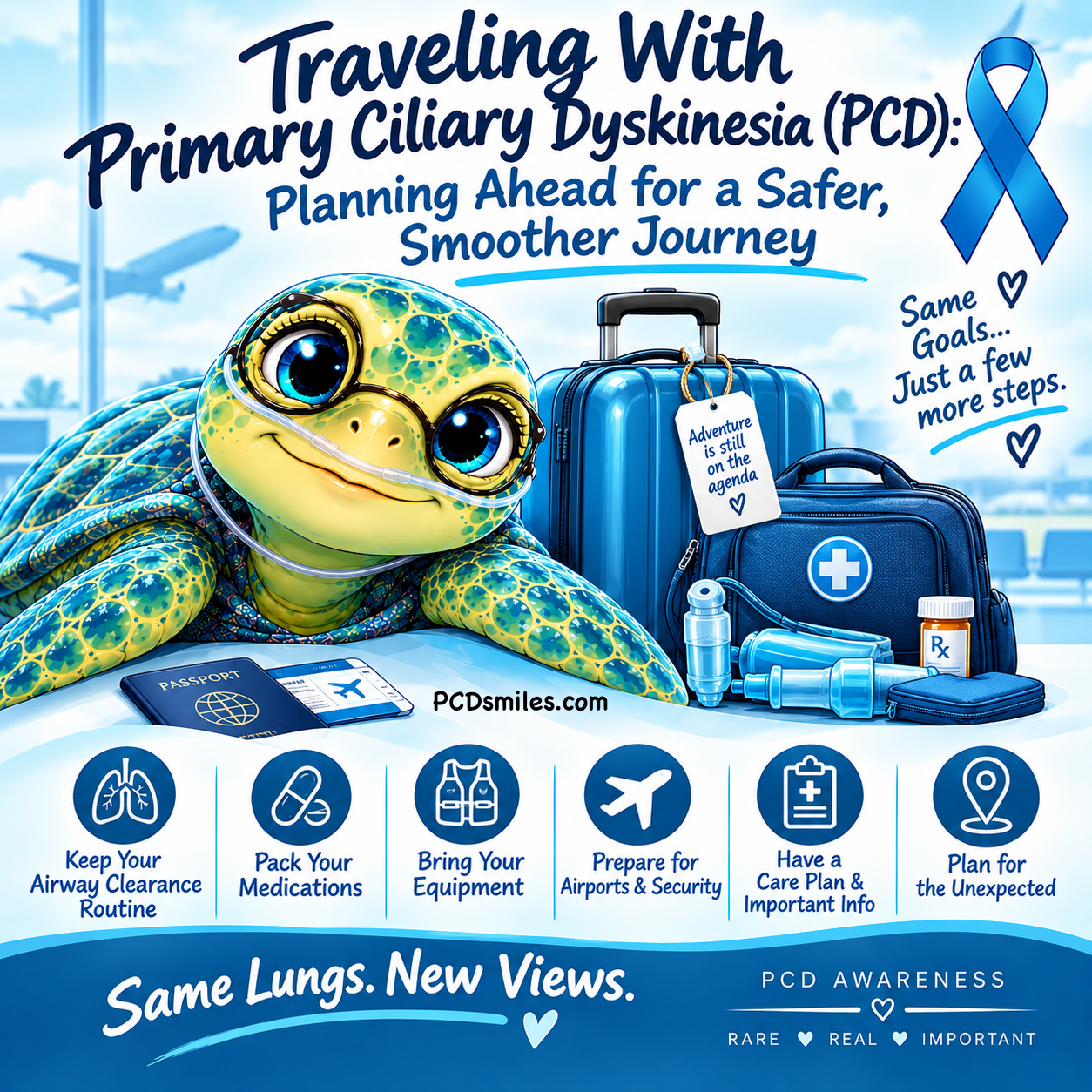

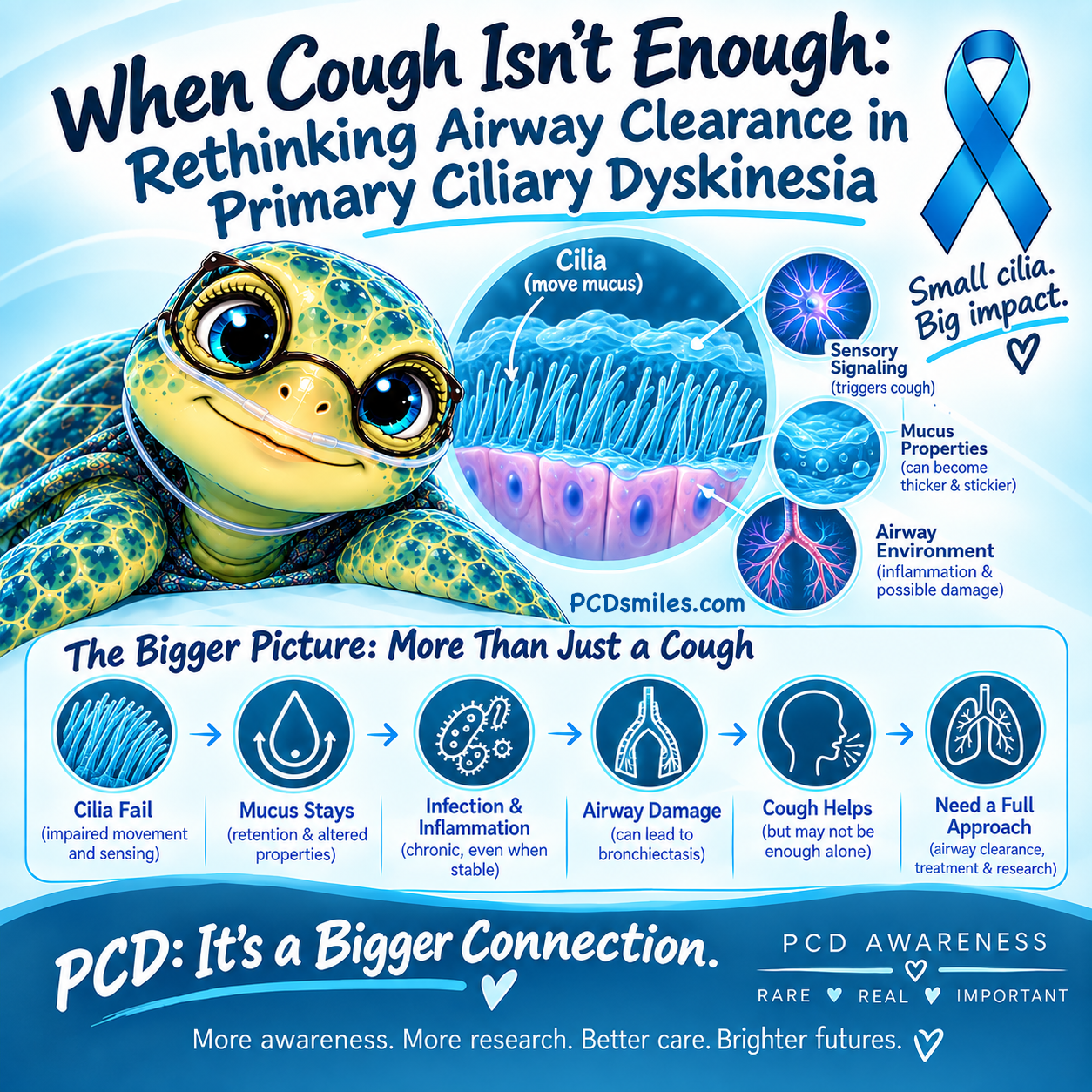
Traveling with Primary Ciliary Dyskinesia (PCD) can be incredibly rewarding, but it requires a little more preparation than simply packing a suitcase. Because PCD affects the cilia responsible for moving mucus through the respiratory system, maintaining your regular airway-clearance routine and medications while traveling is essential.
Flights, changes in climate, long travel days, fatigue, and unexpected delays can all make
staying on schedule more challenging. With thoughtful preparation, however, people with PCD can travel while continuing the treatments and routines that help protect their lungs.
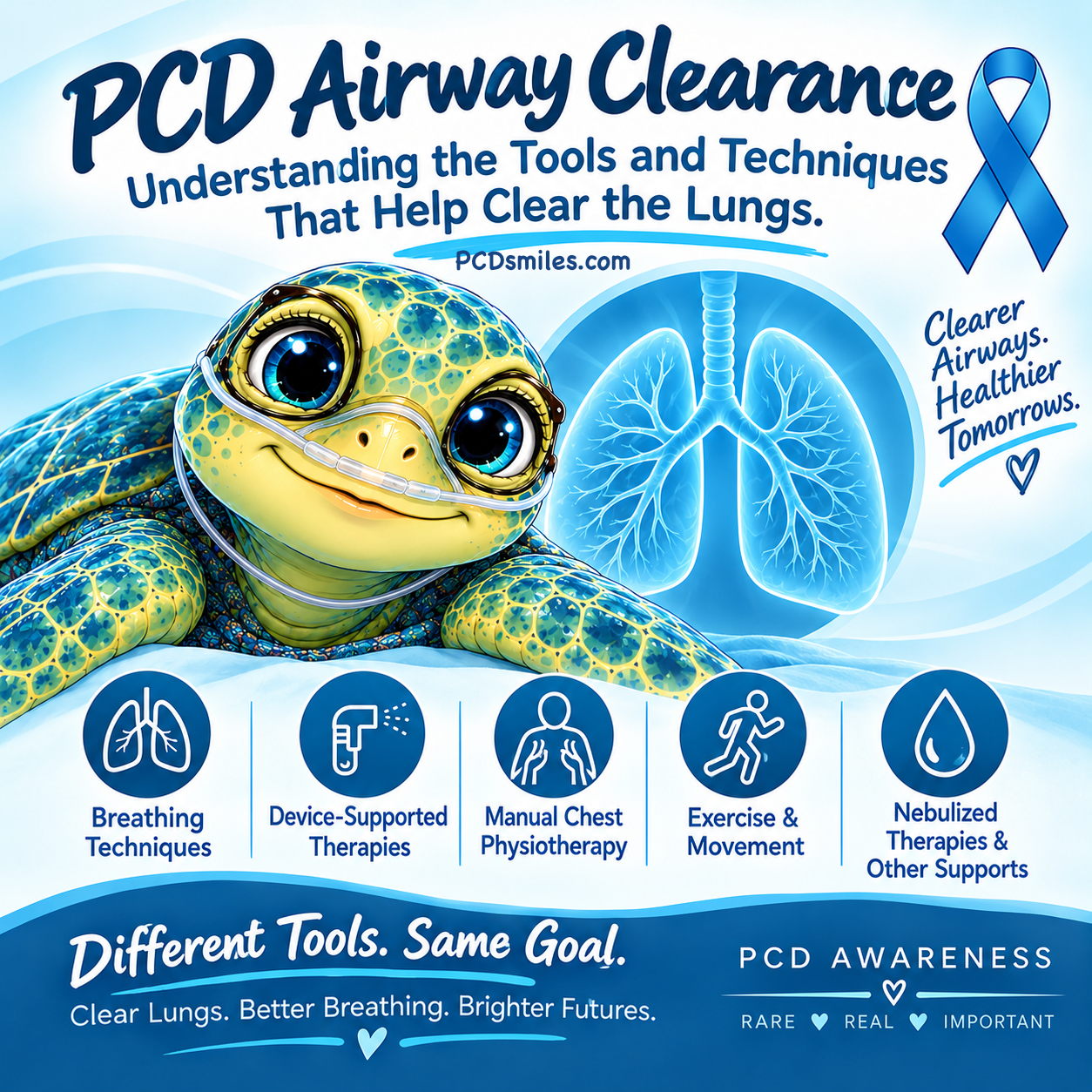
Airway Clearance Doesn't Take a Vacation
Traveling with Primary Ciliary Dyskinesia (PCD) can be incredibly rewarding, but it requires a little more preparation than simply packing a suitcase. Because PCD affects the cilia responsible for moving mucus through the respiratory system, maintaining your regular airway-clearance routine and medications while traveling is essential.
Changes in routine, long periods of sitting, travel fatigue, and changes in the environment can make it especially important to stay consistent with your airway-clearance plan.
Traveling With a Vest or Volara
If you use a high-frequency chest wall oscillation (HFCWO) vest or an Oscillation and Lung Expansion (OLE) Volara, plan ahead.
Before your trip:
- Contact the equipment manufacturer about a travel case.
- Ask your healthcare provider for a medical-necessity letter if appropriate.
- If traveling internationally, check the destination's electrical voltage requirements.
- Determine whether you need a voltage converter in addition to a plug adapter.
- Contact the airline ahead of time about transporting your equipment.
- Never check you device bag. Be sure to carry-on your vest or Volara.
Medical equipment may have different baggage requirements from ordinary luggage, so checking with your airline before departure can help prevent problems at the airport.
Handheld Airway-Clearance Devices
Smaller devices such as OPEP devices can be much easier to travel with.
If you use a device such as an Acapella or Aerobika, consider keeping it in your carry-on rather than putting it in checked luggage.
That way, it remains available if your flight is delayed, you have a long layover, or your checked baggage is lost.
Traveling With a Nebulizer
If nebulized treatments are part of your PCD routine, consider the logistics before leaving home.
A portable or battery-operated nebulizer can make travel easier, particularly when access to electrical outlets may be limited.
Depending on your trip, you may also want to plan for:
- Appropriate plug adapters
- A car charger for road trips
- Extra batteries or a backup power source
- A backup airway-clearance technique that doesn't require electricity
Having a non-powered option, such as a breathing-based airway-clearance technique you've already been taught, can provide an important backup if equipment fails or power isn't available.
Managing Medications While Traveling
Medication organization is another major part of traveling with PCD.
A good rule is to plan for more medication than you expect to need in case your trip is unexpectedly extended.
Keep Essential Medications With You
Whenever possible, keep essential medications in your carry-on luggage rather than checked baggage.
Checked bags can be delayed or lost, leaving you without medications when you need them.
Carry your medications in their original pharmacy packaging, with prescription labels intact.
Liquid medications should be carried on to the plane and never in your checked baggage.
Bring Your Medical Documentation
Consider carrying documentation from your healthcare team that includes information such as:
- Your PCD diagnosis
- Current medications
- Relevant medical history
- Airway-clearance equipment you use
- Any medical supplies or devices you need to travel with
Having this information readily available can make communication with airport personnel or healthcare professionals at your destination easier.
Plan for Medications That Require Cooling
Some medications may require special storage conditions.
If any of your medications need refrigeration, plan ahead for transportation and storage. A medical cooling pouch or appropriate insulated container may be useful depending on the medication's specific requirements.
Always follow the storage instructions for the individual medication.
Don't Forget Nebulizer Supplies
If you use hypertonic saline or other nebulized treatments, bring enough supplies for the entire trip, plus additional supplies for unexpected delays.
Nebulizer hygiene is particularly important while traveling.
Consider packing:
- Cleaning supplies
- A clean drying surface
- Appropriate water for cleaning or rinsing equipment
- Backup nebulizer components when practical
Follow the cleaning and disinfection instructions provided for your specific nebulizer.
Check into places at your destination to buy cleaning supplies and any necessary water.
Navigating Airports and Security
Airports can be stressful when you're traveling with medical equipment and liquids, but preparing ahead can make the process much easier.
Airport Security
If you're traveling through U.S. airports, medications and medically necessary liquids may be subject to different screening procedures than ordinary liquids.
Before going through security, tell the screening officer that you're carrying medically necessary medications, liquids, or equipment and follow the current screening requirements.
Because airport procedures can change, checking the latest requirements before your trip is a good idea.
Tell the Airline About Medical Equipment
If you're flying with medical equipment, consider contacting the airline's accessibility or special-assistance department before your trip.
Ask about:
- Carry-on requirements for medical equipment
- Equipment storage
- Battery requirements
- Boarding procedures
- Any documentation they may require
Planning ahead can reduce surprises at the airport.
Prepare for the Unexpected
Even the best-planned trip can encounter delays or unexpected medical needs.
Before leaving, consider identifying a hospital or respiratory center near your destination that is familiar with respiratory care.
It's also helpful to have easy access to:
- Your current medication list
- Your PCD care plan
- Recent relevant medical information
- Baseline lung-function information, if available
- Contact information for your healthcare team
You may want to keep both a digital and physical copy of important information.
Build Your Travel Plan Around Your Health
Traveling with PCD doesn't mean you have to stay home.
It simply means airway clearance, medications, and medical equipment need to be part of the travel plan—not an afterthought.
Before leaving, think through the entire journey:
How will I do my airway clearance?
How will I transport my equipment?
Where will my medications be stored?
What happens if my flight is delayed?
What if my equipment stops working?
Where can I get medical care if I need it?
Answering those questions before you leave can make it much easier to enjoy the trip once you're there.
The Bottom Line
PCD may require extra planning, but it doesn't have to keep you from exploring the world.
With preparation, backup plans, and a commitment to maintaining your airway-clearance and medication routines, people with PCD can travel while continuing to care for their lungs.
Pack your medications. Pack your equipment. Pack your backup plan.
And then—go make some memories.
Be sure to join us tomorrow for another conversation about primary ciliary dyskinesia.
Join our Facebook group Turtle Talk Café today.
We have several ways that you can donate to PCD Smiles;
- Visit Smile E. Turtle's Amazon Wishlist
- For more information on how you can donate, please visit our "Donation" page to check out our "Do & Don't policies.
- Or sponsor a PCD Smiles cheer package today!
- To shop for your “Official” turtle care ribbon gear today, visit PCD Style
Thank you for your consideration!
Medical Disclaimer
This article is intended for general educational and informational purposes only and is not a substitute for professional medical advice, diagnosis, or treatment. Infection risks and appropriate prevention strategies can vary considerably between people with PCD based on their lung health, respiratory cultures, treatments, age, and other medical conditions.
Cleaning and disinfection recommendations for respiratory equipment can also vary by device and manufacturer. Always follow the instructions provided by your healthcare team and equipment manufacturer.
Do not start, stop, or change medications, airway-clearance treatments, infection-control practices, or other aspects of your medical care based solely on this article. If you have PCD and are concerned about an infection, worsening respiratory symptoms, or possible exposure to a pathogen, contact your PCD or respiratory healthcare team for individualized guidance.
If you are experiencing severe or rapidly worsening breathing difficulties or another medical emergency, seek urgent medical attention.