

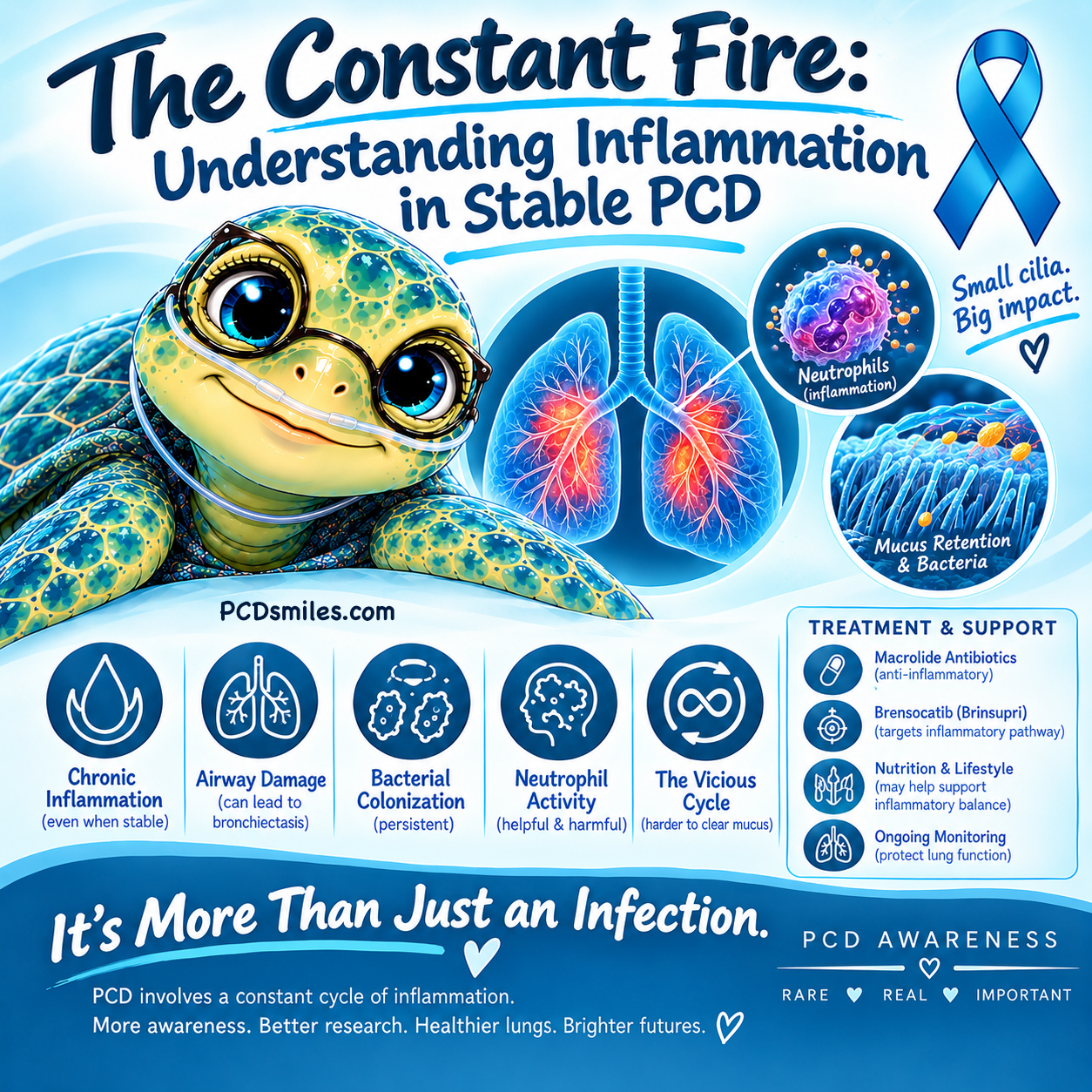
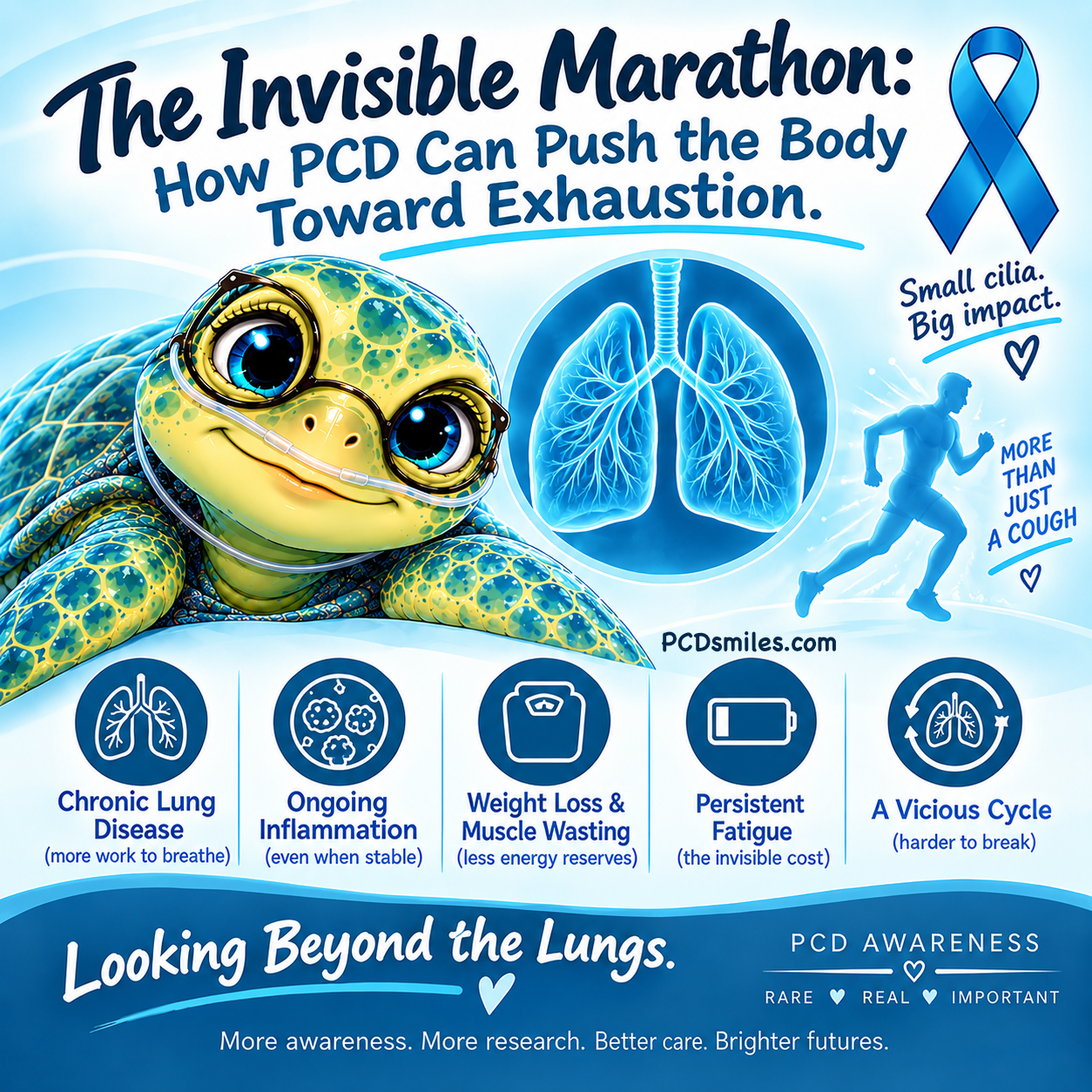
Primary Ciliary Dyskinesia (PCD) is a rare genetic disorder that affects the tiny hair-like structures responsible for moving mucus through the respiratory tract. When these cilia don't function properly, mucus can remain trapped in the lungs, contributing to chronic infections, inflammation, and long-term airway damage such as bronchiectasis.
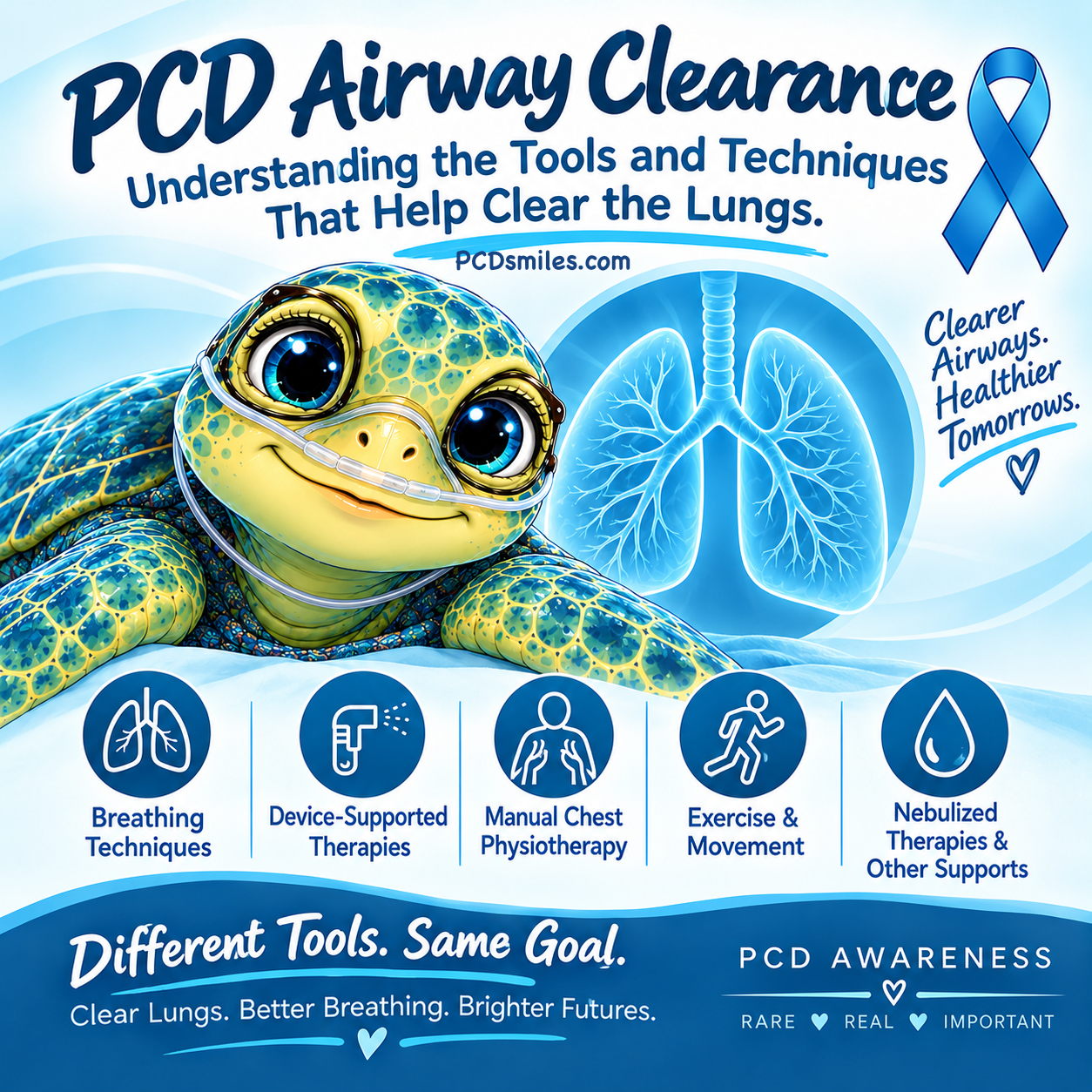
Because the body's natural mucus-clearance system is impaired, airway clearance is a central part of daily PCD management. A variety of breathing techniques, physical therapies, and medical devices can help people move mucus out of their lungs.
However, airway-clearance therapy isn't
one-size-fits-all. Different techniques work differently for different people, and mechanical devices that use pressure or vibration may not be appropriate in certain medical situations. Any airway-clearance program should therefore be individualized with guidance from a healthcare professional familiar with PCD.
Breathing Techniques That Don't Require Equipment
Some airway-clearance techniques rely entirely on controlled breathing. These approaches can help manipulate airflow and move mucus without requiring a mechanical device.
Active Cycle of Breathing Techniques (ACBT)
ACBT uses three components:
- Breathing control — gentle breathing designed to relax the airways.
- Thoracic expansion exercises — deeper breaths intended to help get air behind mucus.
- Forced expiration technique — controlled "huffing" to move mucus toward larger airways.
These techniques can be combined into repeated cycles during an airway-clearance session.
Autogenic Drainage (AD)
Autogenic drainage is a specialized breathing technique in which a person deliberately changes their breathing pattern and lung volume to help:
- Loosen mucus.
- Collect mucus in larger airways.
- Move it upward so it can be expelled.
It requires practice and instruction, but it can be performed without external equipment.
Huff Coughing and Directed Coughing
Coughing is an important part of airway clearance.
A huff cough is different from repeatedly producing a forceful, conventional cough. It involves forcefully exhaling through an open mouth and can help move mucus while reducing the tendency for smaller airways to collapse.
Huffing is often incorporated into other airway-clearance techniques to help remove mucus once it has been mobilized.
Important Precautions
Although breathing techniques are generally less equipment-intensive, they aren't automatically appropriate for everyone. In certain situations such as severe lung hyperinflation, paradoxical breathing patterns, or active inspiratory muscle fatigue require particular caution with certain breathing exercises.
A respiratory therapist or other qualified clinician can help determine which techniques are appropriate.
Device-Supported Airway Clearance
When breathing techniques alone aren't enough, medical devices can provide additional assistance.
These devices use different approaches—including resistance, positive pressure, vibration, oscillation, airway stenting, or rapidly changing pressure—to help loosen and mobilize secretions.
Common Types of Airway-Clearance Devices
|
Device type |
How it works |
Examples |
|
Positive Expiratory Pressure (PEP) |
Provides resistance during exhalation to create backpressure and help keep airways open |
PARI PEP, AstraPEP |
|
Oscillating PEP (OPEP) |
Combines expiratory resistance with vibration |
Aerobika, Acapella, Flutter |
|
Oscillation Lung Expansion (OLE) |
Combines airway pressure, oscillation and aerosol therapy |
Volara, BiWaze Cough |
|
High-Frequency Chest Wall Oscillation (HFCWO) |
Uses an inflatable garment to rapidly oscillate the chest wall |
The Vest, Monarch, SmartVest |
|
Intrapulmonary Percussive Ventilation (IPV) |
Delivers rapid bursts of pressurized gas into the lungs |
Percussionaire IPV |
|
Mechanical Insufflation-Exsufflation |
Alternates positive and negative pressure to simulate a cough |
Cough Assist, Clearway |
Positive Expiratory Pressure (PEP)
PEP devices use a mouthpiece or mask through which the person exhales against resistance.
That resistance creates temporary backpressure, which can help keep airways open and assist with secretion movement.
Oscillating PEP (OPEP)
OPEP devices add oscillations to the expiratory pressure.
Examples include Aerobika, Acapella, and Flutter devices.
The combination of resistance and vibration is designed to help loosen secretions while maintaining airway pressure.
Oscillation & Lung Expansion (OLE)
OLE systems combine several respiratory therapies.
Depending on the device, treatment can incorporate:
- Continuous positive expiratory pressure (CPEP) to help expand the lungs.
- Continuous high-frequency oscillation (CHFO) to help mobilize secretions.
- Nebulized aerosol therapy to deliver medication or moisture to the airways.
Examples include Volara and BiWaze Cough systems.
High-Frequency Chest Wall Oscillation
Often called vest therapy, HFCWO uses an inflatable garment connected to an air-pulse generator.
The garment rapidly oscillates the chest wall, creating mechanical forces intended to help loosen and mobilize mucus.
Intrapulmonary Percussive Ventilation
IPV delivers rapid bursts of pressurized gas into the lungs during inspiration.
These repeated pulses create internal percussion that can help mobilize airway secretions.
Mechanical Insufflation-Exsufflation
Often called Cough Assist, this technology is designed to simulate a strong cough.
The device first delivers positive pressure to help fill the lungs and then rapidly switches to negative pressure. This creates a high-flow expiratory movement intended to help move secretions outward.
When Airway-Clearance Devices May Not Be Safe
Mechanical airway-clearance devices can be extremely useful, but pressure and vibration aren't appropriate in every situation.
Absolute contraindications for certain pressure- or vibration-based techniques include:
- Untreated pneumothorax
- Active hemoptysis or acute pulmonary hemorrhage
- Unstable hemodynamics
Other situations may require additional caution or modification, including:
- Recent lung, spinal, or chest surgery
- Rib fractures
- Severe osteoporosis
- Elevated intracranial pressure
- Certain recently placed implanted devices, including a subcutaneous pacemaker
The appropriate device and treatment intensity should always be determined based on an individual's medical circumstances.
Other Ways to Help Mobilize Mucus
Airway clearance isn't limited to mechanical devices.
Hypertonic Saline
Hypertonic saline is concentrated saltwater delivered through a nebulizer.
When prescribed, it may be used before or during an airway-clearance session to help add moisture to airway secretions and make mucus easier to mobilize and cough out.
Manual Chest Physiotherapy
Traditional chest physiotherapy (CPT) can combine:
- Postural drainage, which uses positioning and gravity to assist drainage from different areas of the lungs.
- Manual percussion, using cupped-hand tapping over the chest.
Exercise
Physical activity may also contribute to airway clearance.
Activities such as running, swimming, or cycling increase breathing depth and airflow; which may help mobilize respiratory secretions, but does not help retained secretions..
Exercise may be incorporated into an individualized airway-clearance routine when appropriate.
Why There Isn't One "Best" Airway-Clearance Method
PCD affects people differently.
One person may respond well to an OPEP device. Another may prefer a vest. Someone else may find that breathing techniques, exercise, nebulized therapy, or a combination of approaches works better.
The important goal isn't choosing the most complicated device.
The goal is effective, sustainable mucus clearance.
A PCD care team can consider factors such as lung function, mucus burden, respiratory symptoms, complications, physical abilities, treatment tolerance, and personal circumstances when developing an airway-clearance plan.
The Bigger Picture: Airway Clearance Is About Protecting the Lungs
PCD means the lungs' natural mucociliary-cleaning system isn't functioning normally.
That makes airway clearance much more than simply "getting mucus out."
Regular mucus clearance can be an important part of reducing retained secretions and helping manage the cycle of:
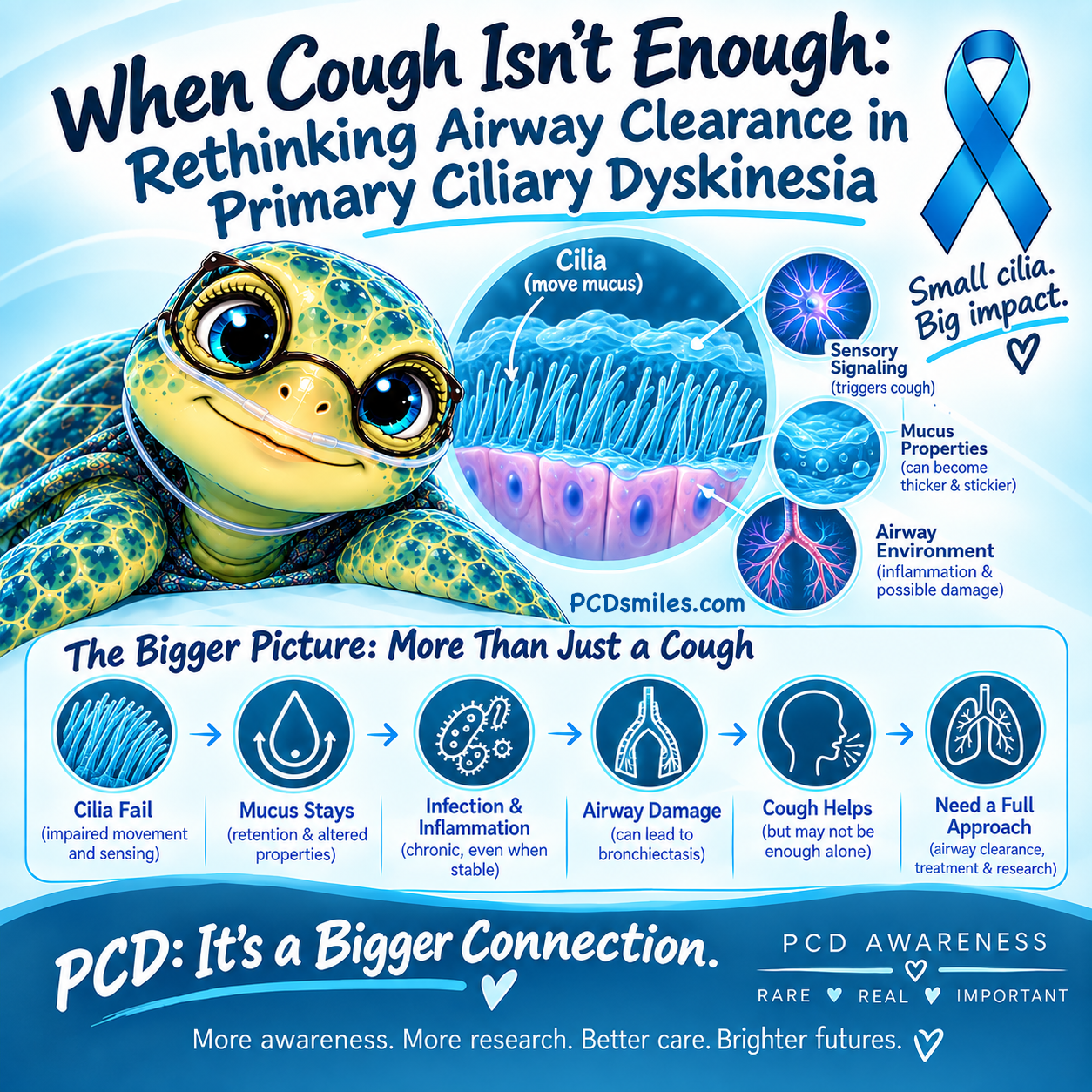
Impaired ciliary movement → mucus retention → infection and inflammation → airway damage → more difficulty clearing mucus.
Over time, repeated infection and inflammation can contribute to bronchiectasis, making effective airway clearance even more important.
There is currently no treatment that simply repairs the underlying ciliary defect. Instead, airway-clearance therapies help compensate for the missing or dysfunctional natural clearance system.
Small Cilia. Big Job. Big Impact.
Living with PCD can mean making airway clearance part of everyday life.
Whether it involves breathing techniques, huff coughing, exercise, manual therapy, nebulized treatments, or specialized equipment, the purpose is the same:
Help the lungs move mucus out.
The right approach is individual—and what works for one person may not work for another.
Understanding the different airway-clearance options can help people with PCD have better conversations with their healthcare teams and find an approach that fits their needs.
PCD may affect microscopic cilia, but protecting the lungs requires a very real, very deliberate daily effort.
Be sure to join us tomorrow for another conversation about primary ciliary dyskinesia.
Join our Facebook group Turtle Talk Café today.
We have several ways that you can donate to PCD Smiles;
- Visit Smile E. Turtle's Amazon Wishlist
- For more information on how you can donate, please visit our "Donation" page to check out our "Do & Don't policies.
- Or sponsor a PCD Smiles cheer package today!
- To shop for your “Official” turtle care ribbon gear today, visit PCD Style
Thank you for your consideration!
Medical Disclaimer
This article is intended for general educational and informational purposes only and is not a substitute for professional medical advice, diagnosis, or treatment. Infection risks and appropriate prevention strategies can vary considerably between people with PCD based on their lung health, respiratory cultures, treatments, age, and other medical conditions.
Cleaning and disinfection recommendations for respiratory equipment can also vary by device and manufacturer. Always follow the instructions provided by your healthcare team and equipment manufacturer.
Do not start, stop, or change medications, airway-clearance treatments, infection-control practices, or other aspects of your medical care based solely on this article. If you have PCD and are concerned about an infection, worsening respiratory symptoms, or possible exposure to a pathogen, contact your PCD or respiratory healthcare team for individualized guidance.
If you are experiencing severe or rapidly worsening breathing difficulties or another medical emergency, seek urgent medical attention.